Heading out of town should feel relaxing, not like you’re leaving money behind on your utility bill. Many homes continue using energy unnecessarily while vacant, from HVAC systems running at full capacity to lights and appliances left on. Planning ahead with a few simple adjustments can make a noticeable difference.
Seasonal vacation prep that focuses on saving energy efficiently while you’re away helps reduce waste without sacrificing comfort when you return. Smart thermostat settings, unplugging unused devices, and adjusting lighting schedules are small changes that add up quickly.
With a thoughtful approach, you can lower energy use, cut costs, and come back to a home that’s just as comfortable as you left it.
Seasonal Vacation Prep That Protects Your HVAC System
What Are The Best HVAC Settings For Travel To Maximize Energy Savings?
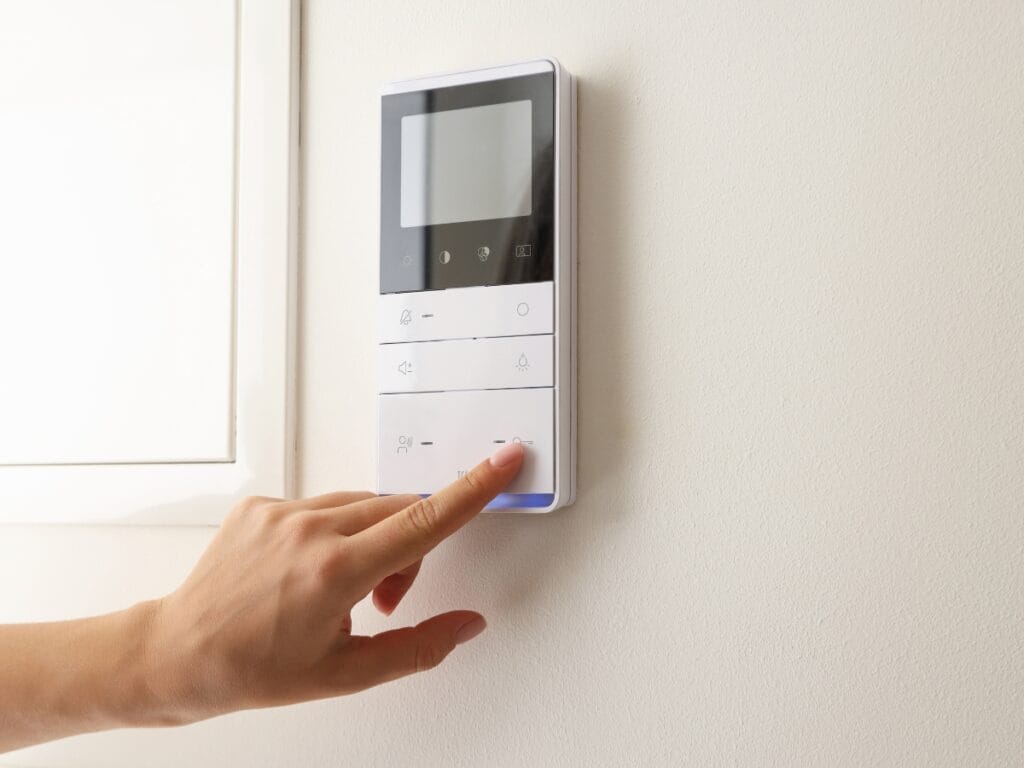
One of the most practical parts of seasonal vacation prep is adjusting your HVAC system before you leave. It is easy to overlook, but your thermostat settings can have a noticeable impact on both energy use and the condition of your home while you are away.
The goal is to strike a balance between saving energy and protecting your property. In warmer months, setting your thermostat to around 85°F helps reduce unnecessary cooling while still preventing excessive indoor heat.
During colder seasons, keeping temperatures between 55°F and 60°F helps protect against issues like frozen pipes without wasting energy on an empty home. Making these adjustments as part of your seasonal vacation prep ensures that your home remains stable, even when you are not there to monitor it.
How Do Smart Thermostats Improve Travel Efficiency?
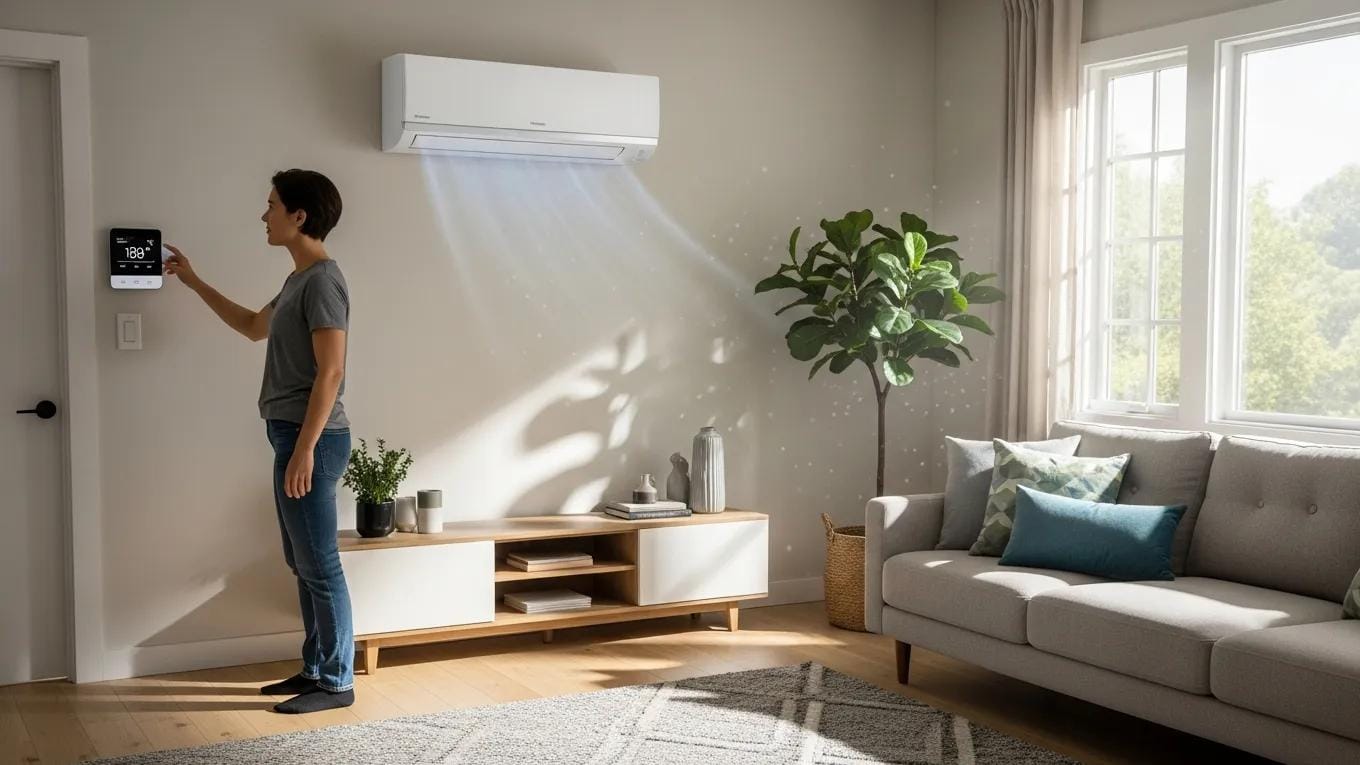
If you have a programmable or smart thermostat, it can simplify the process even further. Instead of manually adjusting settings every time you leave, you can create a schedule that automatically shifts temperatures when the house is unoccupied.
This is especially useful if your travel plans change. With remote access, you can check or update your settings from your phone without needing to return home.
It also allows you to bring your home back to a comfortable temperature shortly before you arrive, so you are not walking into an overly warm or cold space. Using these features as part of your seasonal vacation prep adds convenience while helping you stay mindful of energy use.
What Should You Do Before Leaving Your Home Unattended?
Before heading out, it is worth taking a few minutes to double check your HVAC setup. Small adjustments can go a long way in preventing problems while you are away.
Start by confirming that your thermostat is set correctly for the season. If your system has filters that need replacing, taking care of that beforehand can improve efficiency while the system runs at a reduced level. It is also helpful to make sure vents are open and unobstructed so air can circulate properly.
These simple steps fit naturally into your seasonal vacation prep routine and help ensure your system runs as expected while you are gone.
How Can HVAC Settings Protect Your Home While You Travel?
Beyond energy savings, your HVAC system plays an important role in maintaining a safe indoor environment. Extreme temperatures can lead to issues that are expensive to fix, especially if they go unnoticed for several days.
In the winter, keeping a low but steady temperature helps prevent pipes from freezing, which can cause significant water damage. In the summer, maintaining moderate cooling reduces humidity levels, which can help prevent mold growth and protect furnishings.
Thinking of your HVAC settings as a form of protection, rather than just a cost-saving measure, adds another layer of value to your seasonal vacation prep.
How Do You Balance Comfort And Efficiency When Returning Home?
The final step is planning for your return. While saving energy is important, you also want your home to feel comfortable when you walk back in. This is where timing becomes key.
If your thermostat allows scheduling, you can set it to begin adjusting temperatures a few hours before you arrive. This way, your home gradually returns to a comfortable range without running the system unnecessarily while you are away.
Taking this approach keeps your seasonal vacation prep both practical and thoughtful. You save energy while you are gone, and you still come home to a space that feels ready to settle back into.
How Does Smart HVAC Vacation Mode Reduce Energy Consumption?
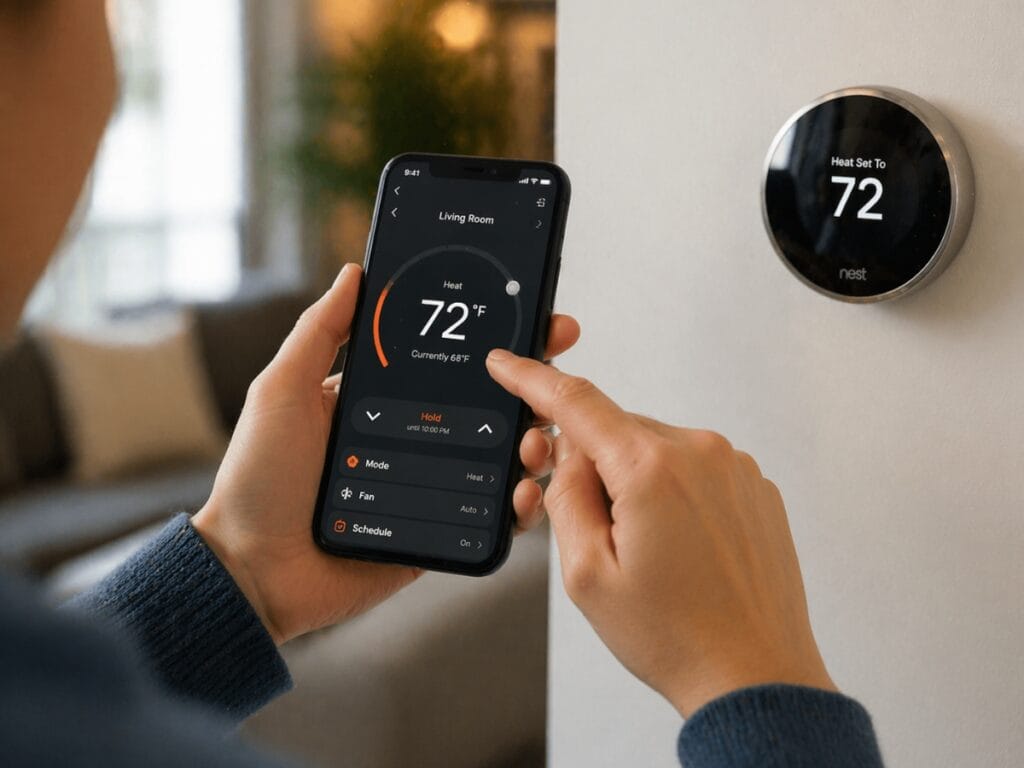
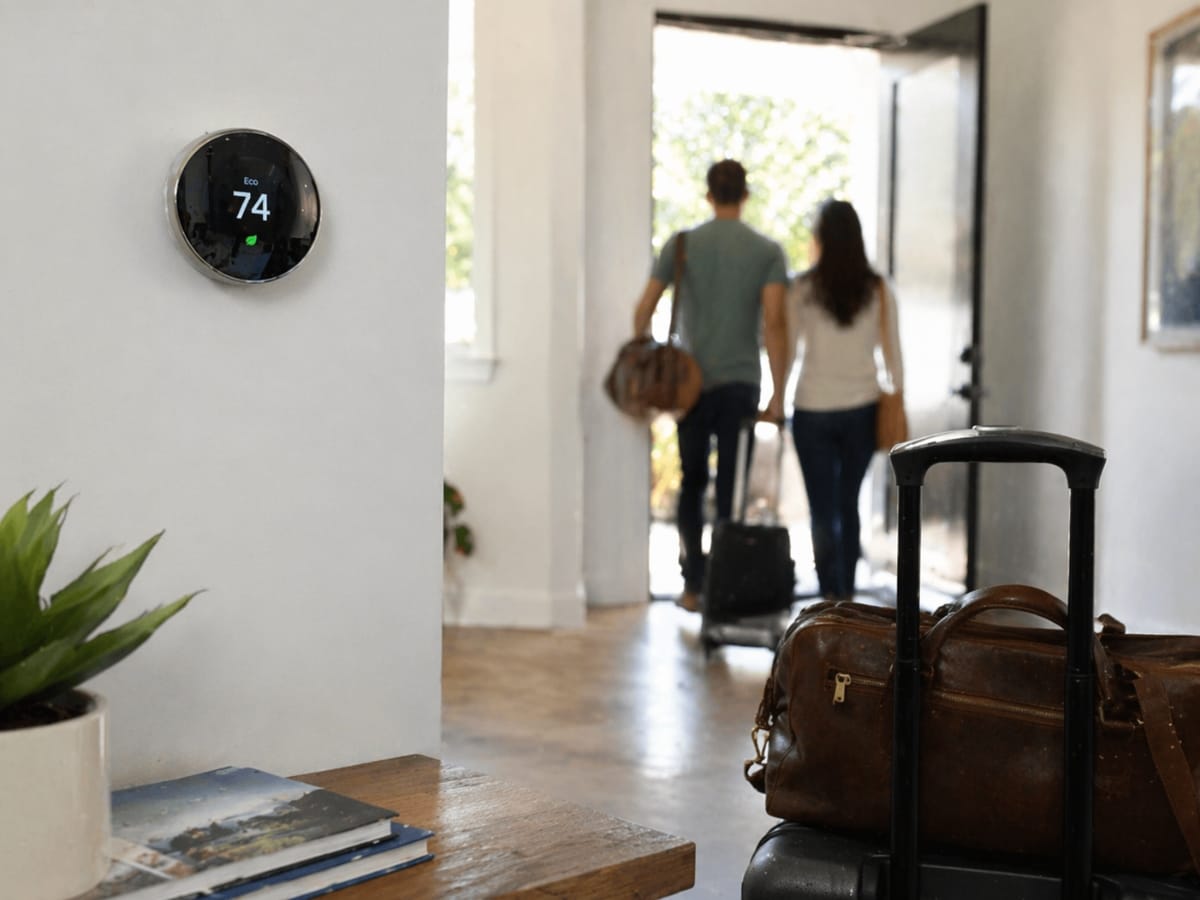
One of the more effective upgrades you can make during seasonal vacation prep is using a smart thermostat with vacation mode. Instead of simply adjusting your temperature once and hoping for the best, this feature allows your system to run more intentionally while you are away.
Vacation mode is designed to reduce energy use without shutting your system down completely. It keeps your home within a safe temperature range, which helps prevent issues like excess humidity in the summer or freezing conditions in the winter. At the same time, it avoids running your system as often as it would if you were home.
This balance is what makes it so useful. You are not just lowering your energy bill, you are also maintaining a stable environment while your home is unoccupied.
What Features Make Smart Thermostats Useful For Travel?
Smart thermostats offer a level of flexibility that traditional systems simply cannot match. During seasonal vacation prep, these features allow you to stay connected to your home even when you are far away.
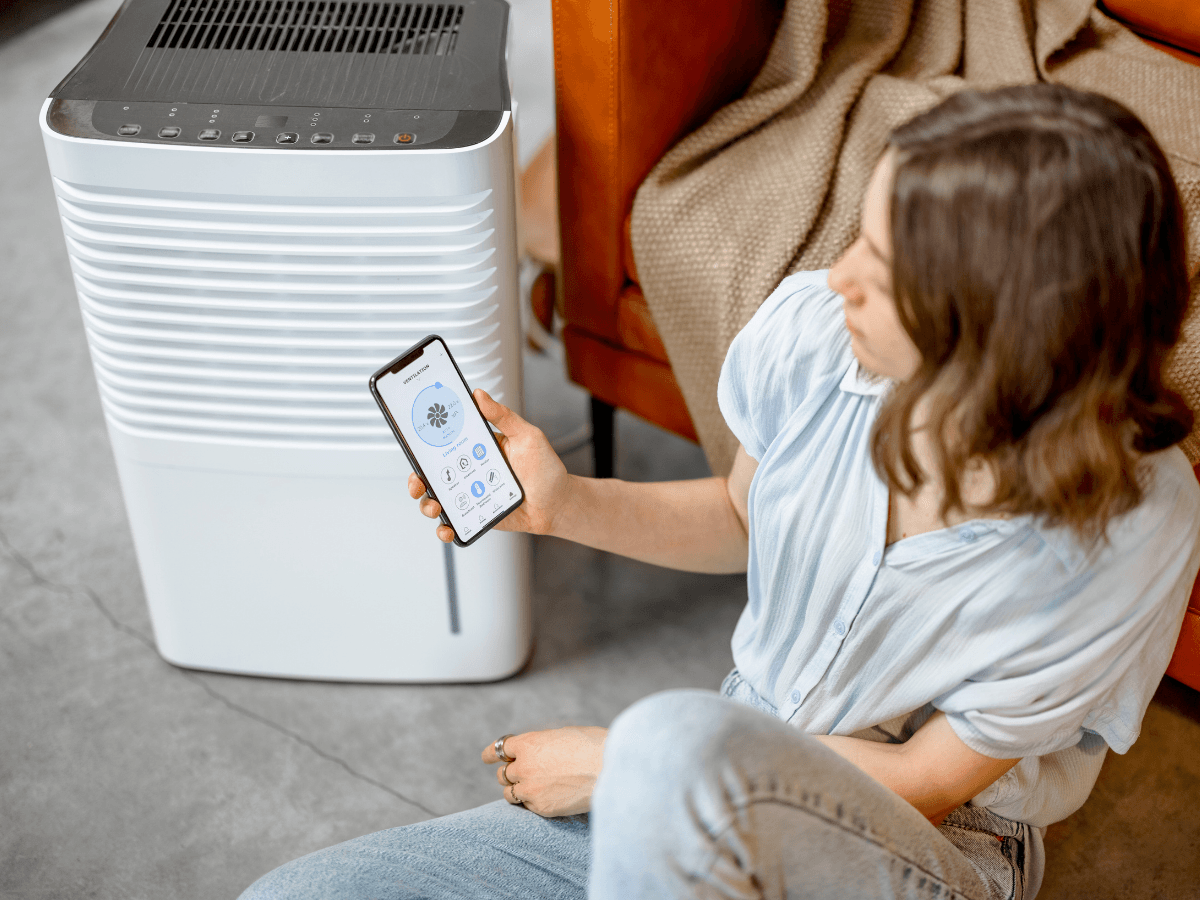
One of the most practical tools is mobile app control. This allows you to adjust your temperature settings at any time, whether your plans change or the weather shifts unexpectedly. Instead of worrying about what is happening at home, you can check in and make updates in seconds.
Another helpful feature is geofencing, which automatically adjusts your system based on your location. As you get closer to home, your thermostat can begin returning to a comfortable setting without requiring manual input. This creates a smoother transition when your trip ends.
Many systems also provide energy usage reports. These insights can help you understand how your HVAC system performs while you are away and give you a clearer picture of where energy savings are coming from.
How Can Remote Monitoring Improve HVAC Management?
Remote monitoring adds another layer of control that goes beyond simple scheduling. It allows you to actively manage your system in real time, which can be especially useful during longer trips.
If outdoor temperatures change unexpectedly, you can adjust your settings to compensate. This helps prevent your home from becoming too warm, too cold, or too humid while you are away. It also gives you more confidence that your system is responding properly to changing conditions.
Many smart systems also send alerts if something is not working as expected. For example, if your HVAC system detects a performance issue, you may receive a notification. This early warning can help you address small problems before they turn into larger repairs.
Including remote monitoring as part of your seasonal vacation prep gives you more control without adding extra effort.
How Does Smart Technology Support Long-Term Energy Savings?
While vacation mode is helpful in the short term, it also contributes to better energy habits over time. By tracking how your system performs when you are away, you can identify patterns and make smarter decisions about your settings in the future.
For example, you may notice that your home stays within a safe range even with slightly higher or lower temperature settings. Adjusting based on this information can lead to consistent savings without affecting comfort when you are home.
Smart HVAC systems are not just about convenience. They provide a more thoughtful way to manage energy use, especially during periods when your home is empty.
How Should You Integrate Smart HVAC Into Your Travel Routine?
The most effective approach is to treat your thermostat as part of your overall seasonal vacation prep, rather than a separate task. Before you leave, take a moment to confirm your vacation mode settings, check that remote access is working, and review any scheduled changes.
By doing this, you create a system that runs in the background without constant attention. Your home stays protected, your energy use stays controlled, and you can focus on your trip without second-guessing your setup.
With the right configuration, smart HVAC technology turns seasonal vacation prep into a more efficient and predictable process.
What IT Solutions Support HVAC Energy Management During Vacations?

As part of seasonal vacation prep, many homeowners are starting to look beyond basic thermostat adjustments and toward more advanced technology.
IT-driven HVAC solutions offer a more dynamic way to manage energy use while you are away, helping your system respond to real conditions instead of relying on fixed settings.
These tools are designed to automate decision-making and provide insights into how your system operates over time. Instead of guessing whether your home is staying within a safe temperature range, you can rely on data and automation to keep everything running efficiently in the background.
How Does IoT HVAC Control Improve Efficiency While You Travel?
IoT-based HVAC systems take a more responsive approach to energy management. Rather than maintaining a single temperature throughout your home, these systems can adjust conditions based on specific zones and usage patterns.
For example, zoning capabilities allow certain areas of your home to receive more or less heating and cooling depending on need. During seasonal vacation prep, this can be especially useful because it reduces unnecessary energy use in areas that do not require constant climate control.
Smart dampers and connected thermostats also work together to regulate airflow more precisely. This helps your system avoid overworking, which not only saves energy but also reduces wear over time. By continuously adjusting based on real-time conditions, IoT systems create a more efficient and balanced indoor environment.
How Does Real-Time Data Help You Stay In Control?
One of the most valuable aspects of these systems is their ability to collect and interpret data as conditions change. Instead of relying on static settings, your HVAC system can respond to shifts in temperature, humidity, or weather patterns.
This becomes particularly useful during longer trips. If outside temperatures rise or drop more than expected, your system can make small adjustments automatically to maintain a stable indoor environment. This helps prevent issues like excessive heat buildup or cold spots without requiring constant input from you.
Including this level of monitoring in your seasonal vacation prep adds an extra layer of reliability, especially if you are leaving your home unattended for an extended period.
What Role Does Automation Play In Energy Management?
Automation is where these IT solutions really stand out. Instead of manually adjusting settings before every trip, you can create schedules that align with your travel habits. Once those preferences are set, the system handles the rest.
Automated scheduling allows your HVAC system to shift into an energy-saving mode when the house is empty and return to a more comfortable setting before you arrive. This reduces unnecessary usage while still making your return feel seamless.
Energy management software can also track patterns over time. By reviewing how your system performs during different trips, you can refine your settings to improve efficiency without sacrificing comfort.
How Do These Systems Support Long-Term Home Performance?
While the immediate goal of seasonal vacation prep is to manage your home while you are away, these solutions also contribute to long-term system health. When your HVAC system runs more efficiently, it experiences less strain, which can help extend its lifespan.
Regular adjustments based on real conditions also reduce the likelihood of extreme temperature swings inside your home. This not only protects your HVAC system but can also help preserve furniture, flooring, and other interior elements.
By integrating IT solutions into your routine, you move from reactive adjustments to a more proactive approach. Your system becomes something that works with your schedule rather than something you have to constantly manage.
How Can You Incorporate These Tools Into Your Routine?
The easiest way to get started is to include HVAC technology as part of your broader seasonal vacation prep checklist. Before leaving, confirm that your system is set to the appropriate mode, check that remote access is working, and review any automated schedules you have created.
Once everything is in place, these systems require very little attention. They continue to monitor conditions, adjust settings, and provide updates as needed, allowing you to focus on your trip instead of worrying about your home.
With the right setup, IT-driven HVAC solutions turn seasonal vacation prep into a more efficient, predictable, and hands-off process.
Which Maintenance Tips Should Be Followed Before Leaving For Vacation?
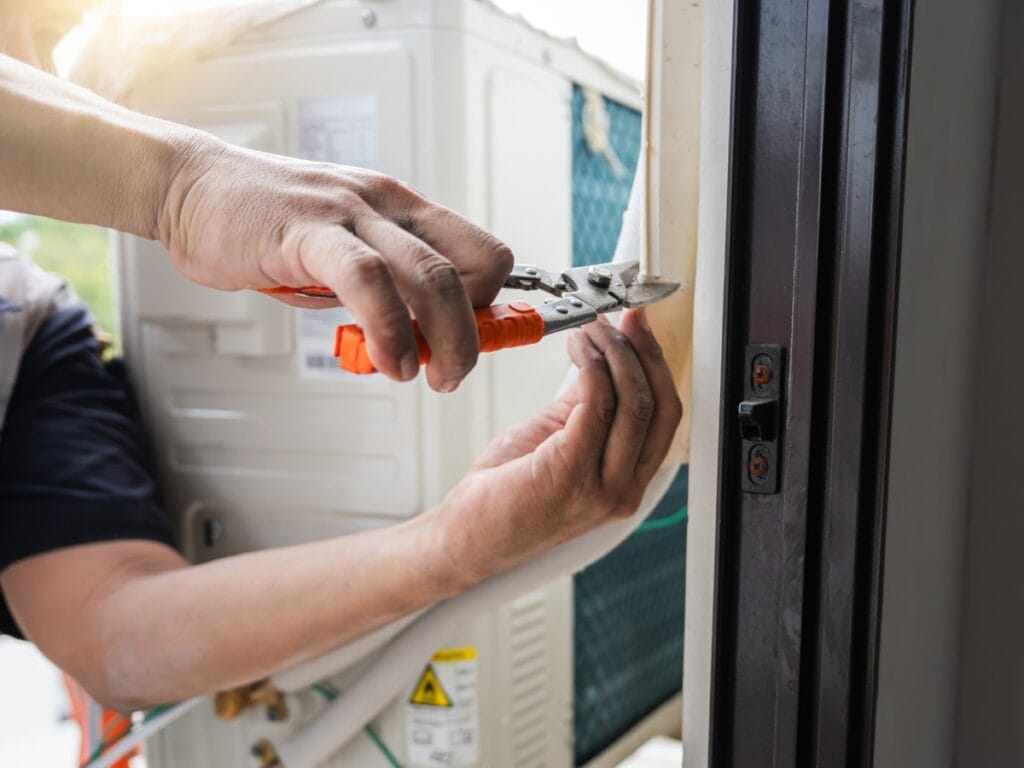
As you prepare for a trip, it is easy to focus on packing and travel plans while overlooking what is happening at home. However, a quick check of your HVAC system is an important part of seasonal vacation prep.
Taking care of a few maintenance tasks before you leave can help your system run more efficiently and reduce the risk of unexpected issues while you are away.
Instead of making adjustments at the last minute, it helps to build these steps into your routine. A well-maintained system is more reliable, which means you can leave with fewer concerns about how your home will hold up in your absence.
How Can You Prepare Your HVAC System Before You Leave?
Getting your HVAC system ready does not require a full overhaul, but a few targeted checks can make a noticeable difference.
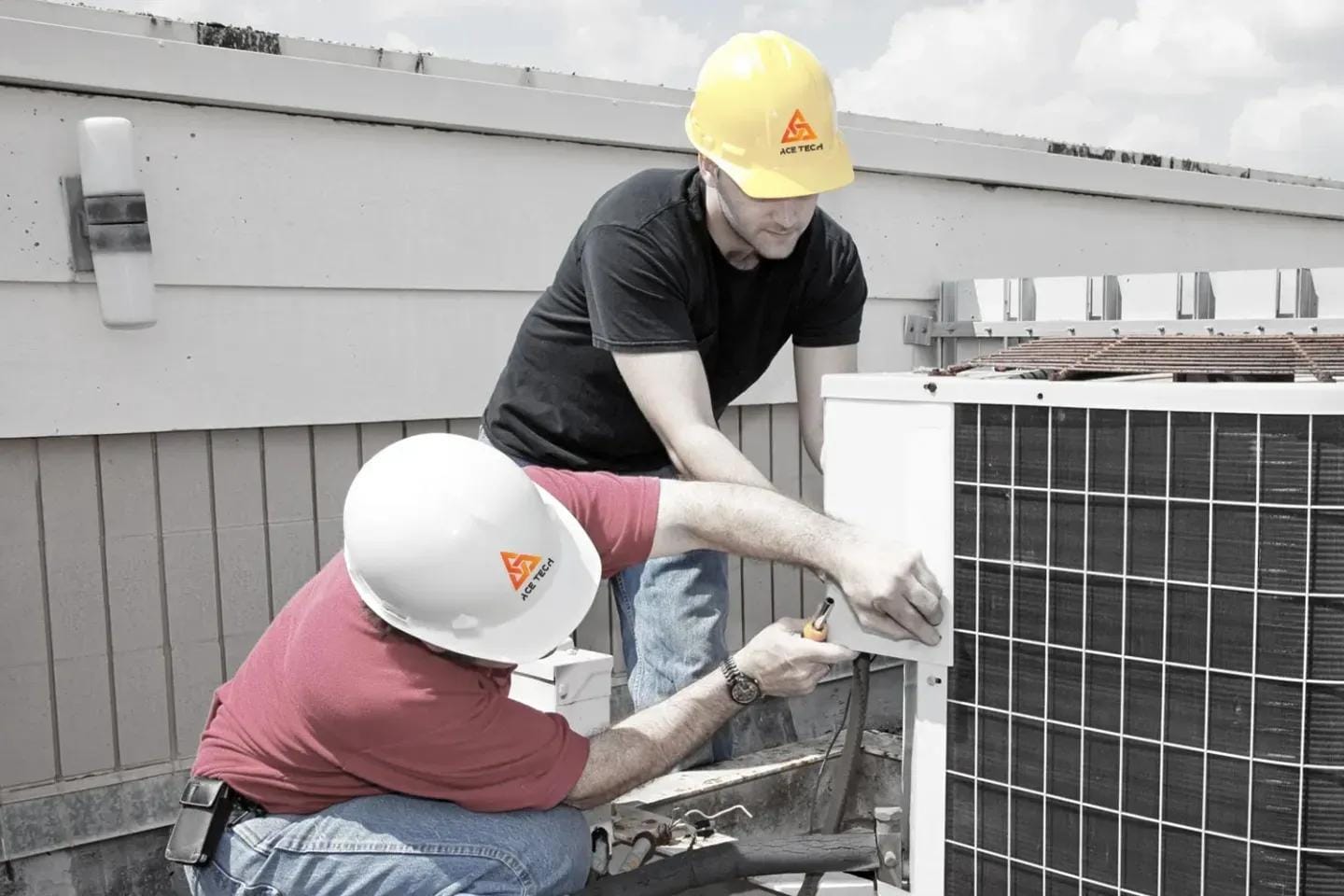
If you have time before your trip, scheduling a professional inspection can provide peace of mind. A technician can identify small issues that might not be obvious but could affect performance over time.
In addition to professional servicing, there are simple tasks you can handle on your own. Replacing your air filter is one of the easiest ways to improve airflow and efficiency. A clean filter allows your system to run more smoothly, especially when it is set to maintain a steady temperature during your absence.
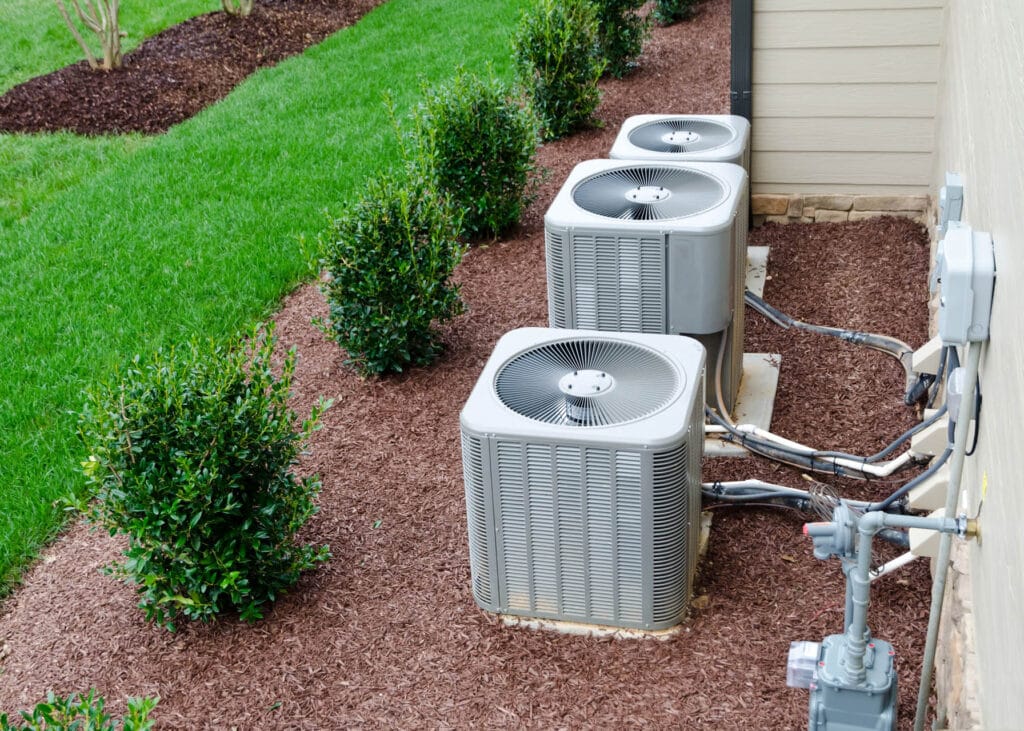
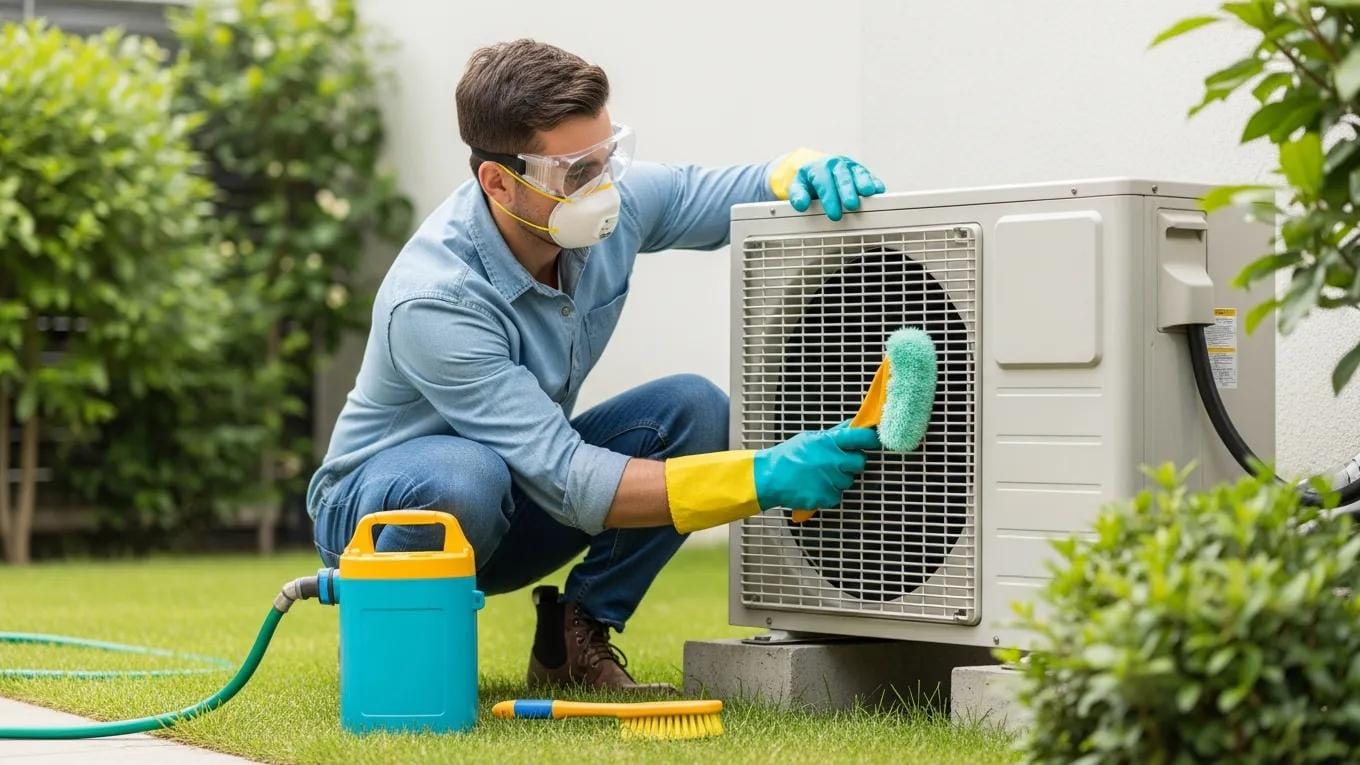
It is also worth checking the outdoor unit. Clearing away leaves, dirt, or debris helps ensure proper airflow and prevents your system from working harder than necessary. These small steps fit naturally into seasonal vacation prep and help keep everything running as expected.
Why Does Pre-Vacation Maintenance Improve Efficiency?
A system that is already clean and functioning properly does not need to work as hard to maintain your chosen settings. This is especially important when your thermostat is set to a more energy-conscious range while you are away.
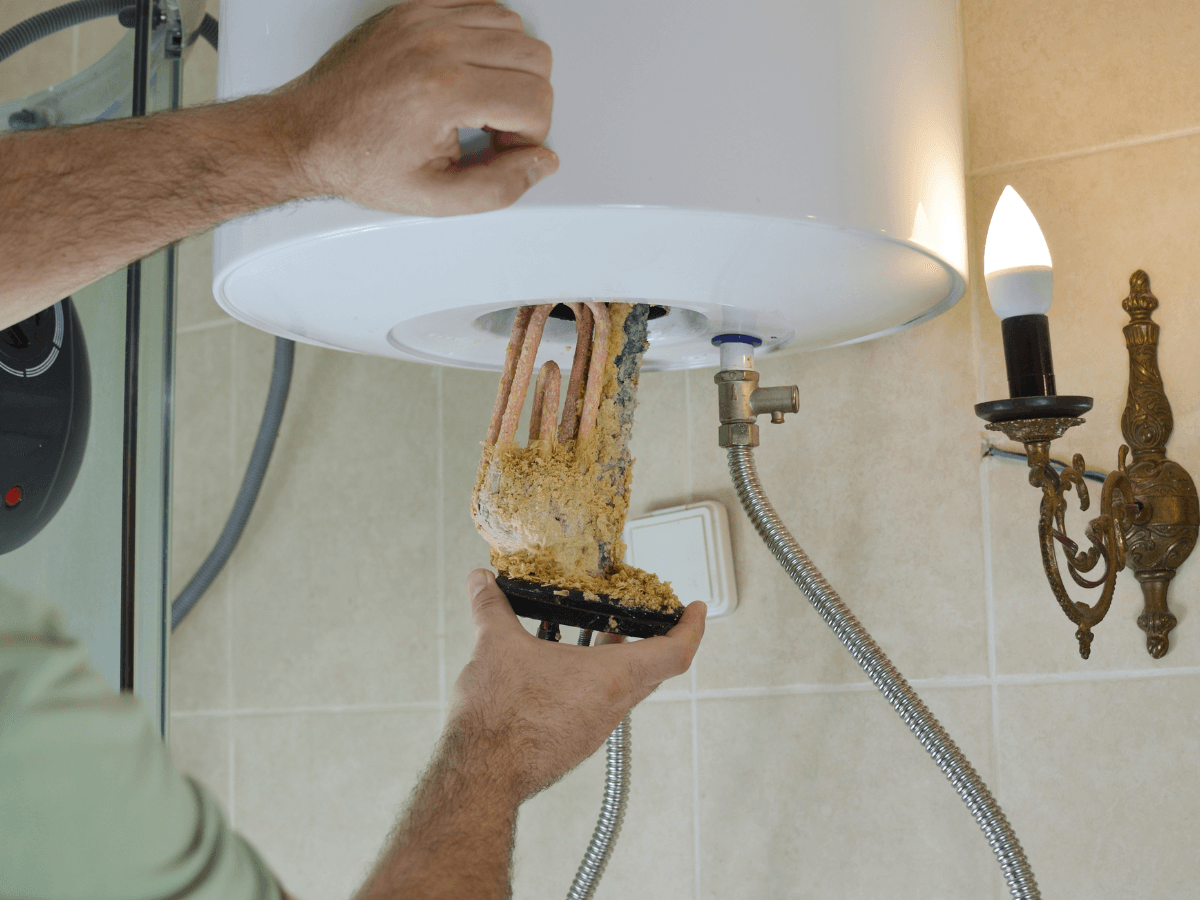
When airflow is restricted or components are not operating efficiently, your HVAC system may cycle more often than needed. Over time, this leads to higher energy use and unnecessary wear. By addressing these issues before you leave, you create conditions that support steady, efficient performance.
Including maintenance in your seasonal vacation prep is not just about preventing problems. It is also about making sure your system can handle extended periods of unattended operation without unnecessary strain.
How Can Maintenance Help Prevent Unexpected Problems?
One of the biggest concerns when leaving home for several days is the possibility of something going wrong while you are not there to catch it. Routine maintenance helps reduce that risk by addressing potential issues early.
For example, a worn component or a partially blocked system might not cause immediate problems, but it could worsen over time. If that happens while you are away, it can lead to more significant repairs. Taking care of these details in advance helps you avoid that situation.
Even simple actions, such as confirming that your system is running normally before you leave, can make a difference. This added layer of preparation supports a smoother and more predictable experience.
How Does Maintenance Fit Into Your Overall Travel Routine?
The easiest way to stay consistent is to treat HVAC maintenance as part of your broader seasonal vacation prep checklist. Just like locking doors or setting alarms, it becomes one more step that helps you leave your home in good condition.
By handling these tasks ahead of time, you reduce the number of things you need to think about once your trip begins. Your system is set up to run efficiently, your home environment remains stable, and you can focus on your time away without unnecessary distractions.
A little preparation goes a long way. When your HVAC system is properly maintained, seasonal vacation prep feels more complete, and returning home becomes a much smoother experience.
What Commercial HVAC Energy Saving Tips Apply During Business Downtime?
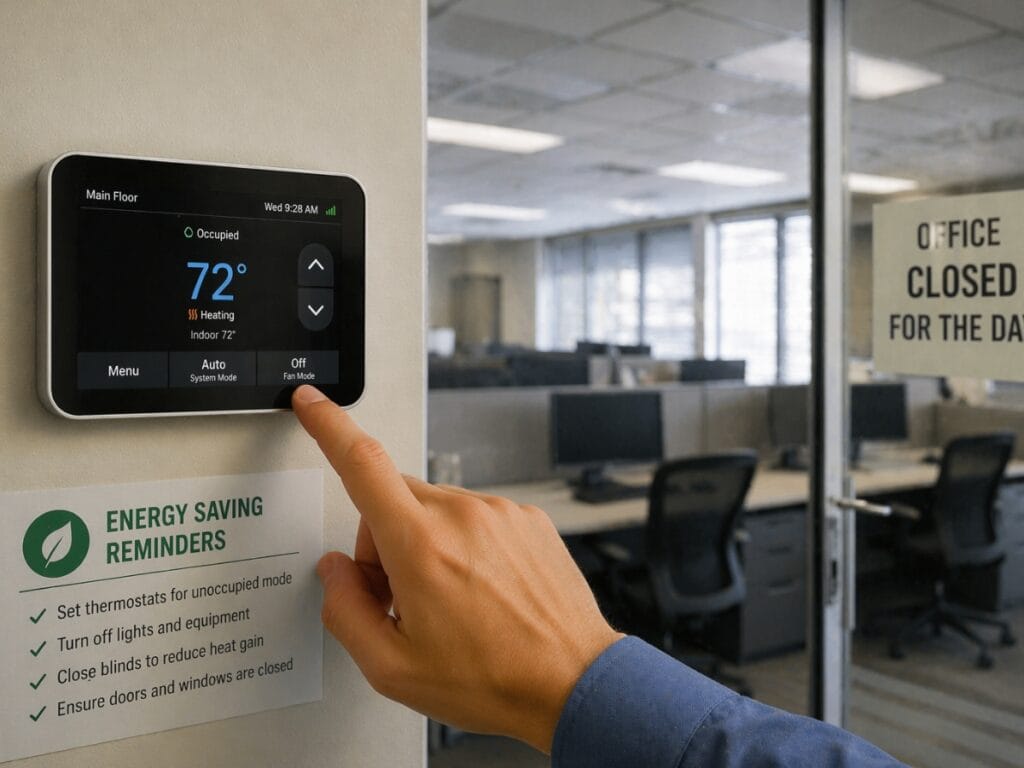
For businesses, periods of downtime present a valuable opportunity to reduce operating costs without disrupting daily operations. Whether it is a holiday closure or a seasonal slowdown, adjusting your systems during these windows can make a noticeable difference. As part of a broader seasonal vacation prep strategy for commercial spaces, HVAC optimization plays a key role in controlling energy use while maintaining building integrity.
Instead of letting systems run at full capacity in an empty building, thoughtful adjustments allow you to scale back usage without compromising essential functions like humidity control or equipment protection.
How Can You Adjust HVAC Systems When Buildings Are Unoccupied?
When a commercial space is not in use, the goal is to reduce energy consumption while still keeping the environment stable.
One of the most effective ways to do this is by resetting your thermostat to a wider temperature range. In warmer months, slightly higher indoor temperatures reduce cooling demand, while cooler settings in winter help limit heating costs.
Zoning can also make a meaningful impact. Rather than conditioning the entire building evenly, you can focus on critical areas such as server rooms or storage spaces that require tighter environmental control. This approach avoids unnecessary energy use in sections that do not need it.
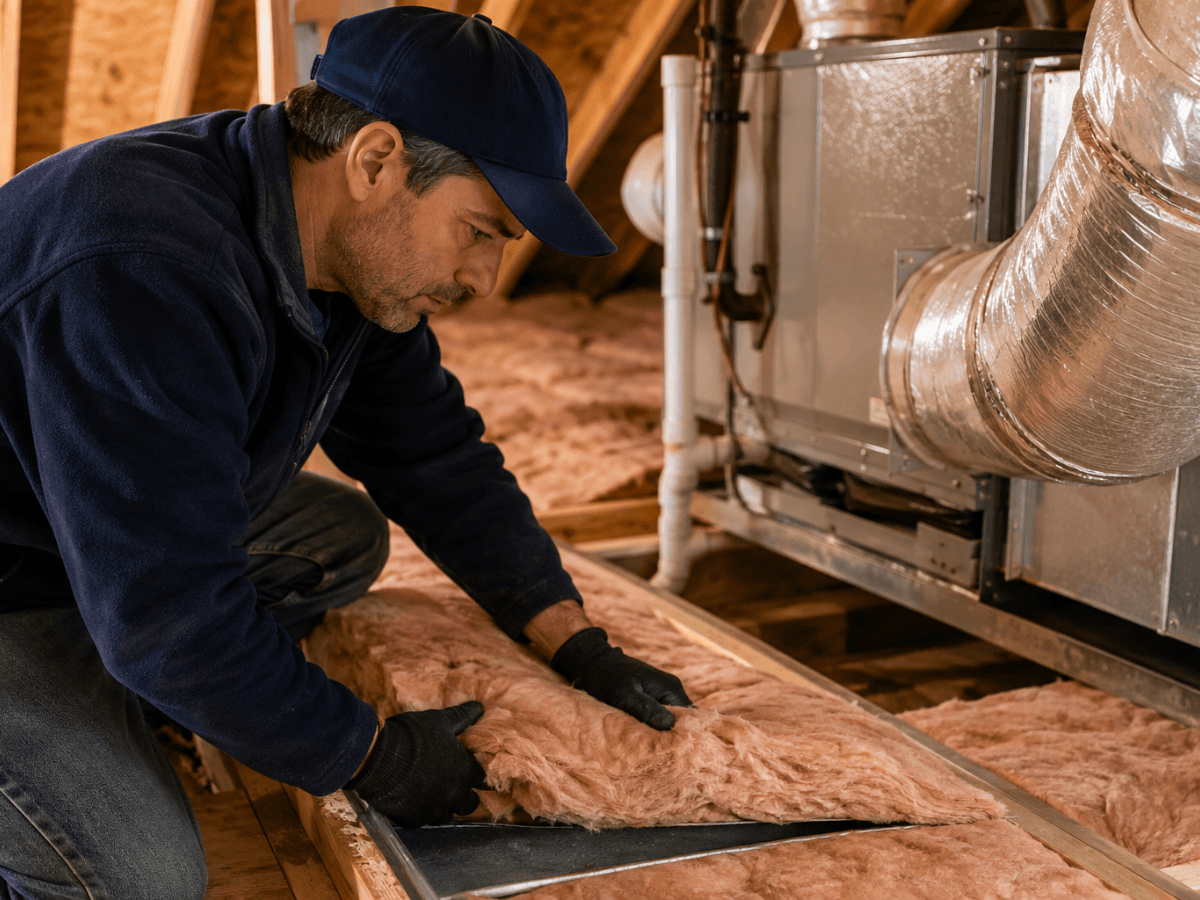
Another important step is checking for air leaks or insulation gaps. Even small inefficiencies can lead to energy loss over time, especially when systems are running unattended.
Addressing these issues ahead of time strengthens the effectiveness of your seasonal vacation prep and ensures your building holds temperature more consistently.
Why Does Strategic Adjustment Matter for Cost Control?
Reducing HVAC output during downtime is not just about lowering utility bills in the short term. It also helps extend the lifespan of your equipment. Systems that run continuously without adjustment tend to experience more wear, which can lead to maintenance issues or premature replacement.
By incorporating these changes into your seasonal vacation prep, businesses can operate more efficiently without sacrificing long-term performance. A system that runs less frequently and more strategically is better positioned to handle peak demand when operations resume.
How Does IT Integration Improve HVAC Efficiency?
Modern commercial buildings increasingly rely on technology to manage energy use more precisely. Integrating IT solutions into your HVAC system allows for automated adjustments based on schedules, occupancy patterns, and environmental conditions.
For example, centralized control systems make it easier to manage multiple zones across a facility. Instead of manually adjusting each unit, facility managers can monitor and control settings from a single interface. This level of oversight reduces the likelihood of wasted energy and ensures consistent performance across the building.
Automation also supports more responsive energy management. Systems can be programmed to shift settings during off-hours and gradually return to normal operation before employees return. This creates a smoother transition and avoids sudden spikes in energy demand.
What Additional Benefits Come from Smart HVAC Management?
Beyond energy savings, IT-driven HVAC systems can contribute to better overall building conditions. Monitoring tools can track indoor air quality, humidity levels, and system performance in real time. This helps identify potential issues early and supports a healthier indoor environment when the building is back in use.
These capabilities make smart systems a natural extension of seasonal vacation prep for commercial spaces. Rather than simply reducing usage, they allow you to manage your building proactively, even when it is unoccupied.
How Can Businesses Build HVAC Planning Into Downtime Routines?
The most effective approach is to treat HVAC adjustments as part of your standard shutdown process. Just like securing equipment or backing up data, preparing your system for downtime should be built into your routine.
By planning ahead, making targeted adjustments, and using available technology, businesses can reduce energy consumption without added complexity. Over time, these small changes add up to meaningful savings and more reliable system performance.
Conclusion
Preparing your home for a seasonal vacation goes beyond packing bags—it’s about optimizing your HVAC system to save energy, protect your property, and ensure a comfortable return.
By adjusting your thermostat appropriately, sealing air leaks, and scheduling a pre-trip maintenance check, you can prevent unnecessary energy waste while avoiding issues like frozen pipes or excessive humidity. For professional guidance and reliable HVAC service before you head out, trust Ace Tech Heating & Cooling.
Ready to travel with peace of mind? Call (404) 369-9100 or get a free quote through our site form today to schedule your pre-vacation HVAC check. Let our certified technicians ensure your home stays efficient, safe, and ready for your return.