Foggy windows, musty odors, damp-feeling rooms, and condensation on cool surfaces can all point to excess moisture inside a home. When humidity remains high throughout multiple rooms, portable units may struggle to provide consistent relief, leaving moisture problems to persist behind the scenes.
Whole-home dehumidifier installation provides a centralized approach to moisture control by removing excess humidity as air circulates through the home.
Maintaining balanced indoor humidity can make living spaces feel more comfortable while helping discourage mold growth, condensation, and moisture-related damage to wood, furnishings, and building materials.
From selecting the right system size to understanding drainage, HVAC integration, and humidity settings, proper installation is key to reliable performance. A whole-home solution can provide more consistent moisture management without requiring separate dehumidifiers throughout the house.
Whole-Home Dehumidifier Benefits for Better Moisture Control
How Is a Whole-Home Dehumidifier Installed?
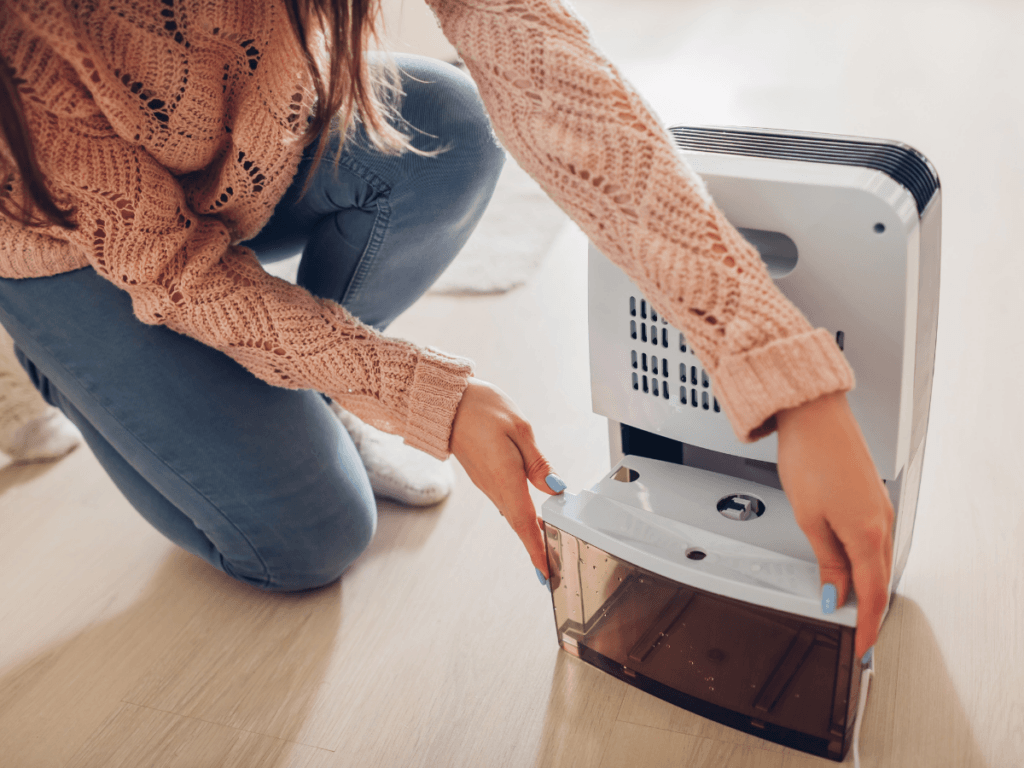
Installing a whole-home dehumidifier involves more than connecting another appliance to the HVAC system. The unit has to be sized for the home’s moisture load, placed where it can drain properly, integrated with the ductwork, and configured so it removes humidity without interfering with normal heating and cooling.
A well-planned installation starts with the house itself. Square footage matters, but so do air leakage, basement or crawl space conditions, insulation, ventilation, HVAC capacity, and how much moisture enters the home during Georgia’s humid months.
These factors help determine both the appropriate equipment and the best installation configuration.
Start With the Source of the Humidity
Before adding mechanical dehumidification, it is important to understand why indoor humidity is elevated.
Moisture may be entering through air leaks, an unsealed crawl space, plumbing problems, inadequate bathroom ventilation, drainage issues, or other building conditions. An air conditioner that is oversized for the home can also cool the space quickly without running long enough to remove as much moisture as expected.
A whole-home dehumidifier can help control indoor moisture, but it should not be used to conceal an active leak or another building problem that needs repair.
Persistent moisture also deserves attention because humid conditions can contribute to condensation and create conditions that support mold growth. Recognizing the signs of moisture and mold in HVAC systems can help homeowners distinguish a broader humidity problem from an isolated comfort complaint.
Choose a Unit Based on More Than Square Footage
Dehumidifiers are rated by how much moisture they can remove over a given period, but selecting equipment solely from a home’s square footage can lead to poor performance.
Sizing should account for the actual moisture load. A tightly sealed home with moderate humidity may have very different needs from a similarly sized house with a damp basement, substantial outdoor-air infiltration, or high indoor moisture generation.
Undersizing can leave the system running frequently without achieving the desired humidity level. Oversizing is not automatically better either. Equipment should be matched to the application and installed according to the manufacturer’s airflow and ducting requirements.
Plan the Ductwork Configuration Carefully
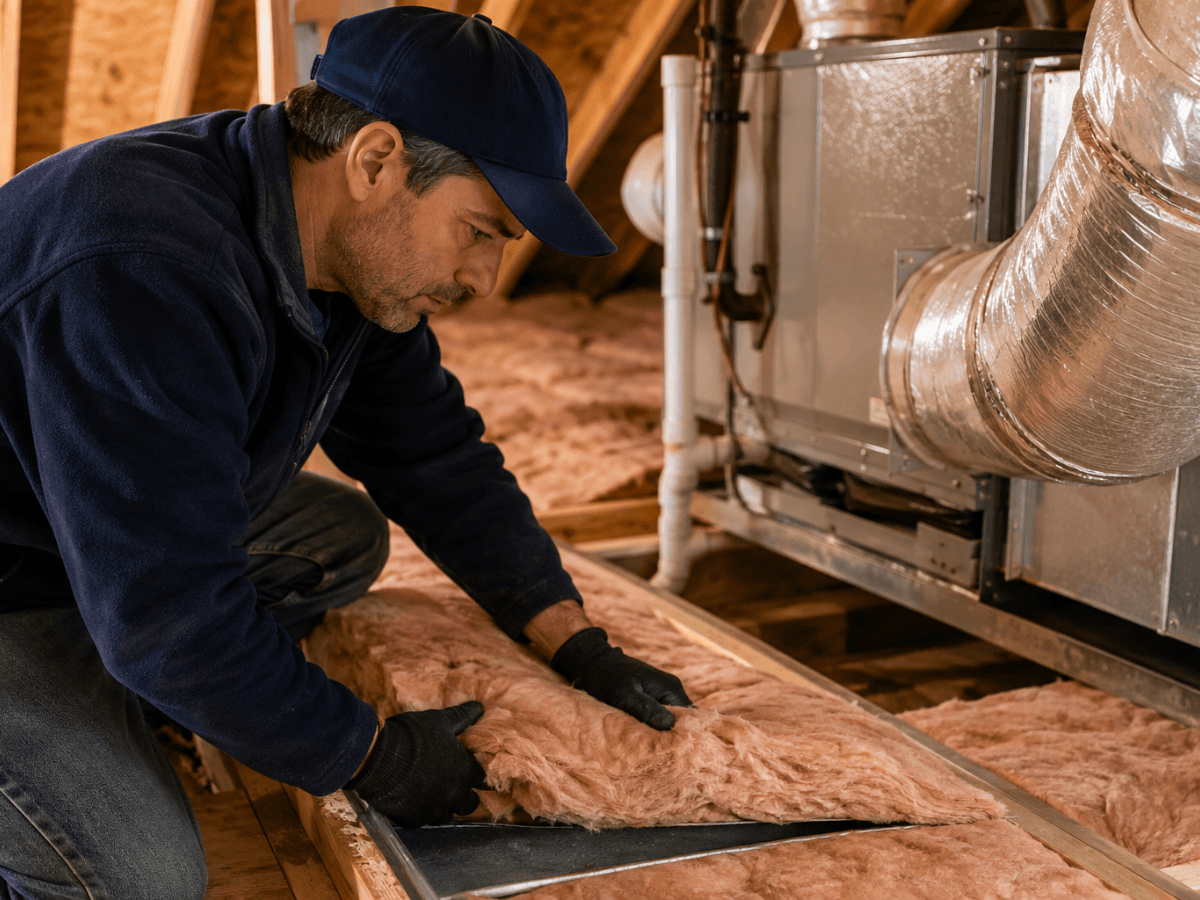
A whole-home dehumidifier can be integrated into HVAC ductwork in several ways depending on the equipment, system layout, available space, and manufacturer’s instructions.
The installation must provide adequate airflow through the dehumidifier without creating excessive static pressure or disrupting the heating and cooling system. Return-air and supply-air connections, dedicated duct arrangements, and independent configurations may all be possible with certain models.
This is one reason a whole-home dehumidifier should not simply be attached wherever there appears to be available duct space. Poor placement can reduce moisture removal, create airflow problems, or cause the equipment to operate differently than intended.
Homeowners already dealing with uneven airflow or other indoor comfort concerns may benefit from evaluating those issues as part of a broader indoor air quality assessment rather than treating humidity as an isolated problem.
Provide a Reliable Condensate Drain
Dehumidification produces water, and that water needs somewhere to go. Most permanently installed systems use a condensate drain that carries collected moisture to an approved drainage location. The drain needs the correct slope and configuration to prevent backups, leaks, or standing water.
If gravity drainage is not practical, some installations may require a condensate pump.
Drainage deserves as much attention as the electrical or ductwork connection. A dehumidifier that removes moisture effectively but leaks condensate into an attic, basement, or mechanical area creates a new moisture problem instead of solving the original one.
Place the Equipment Where It Can Be Serviced
Installation location affects both performance and future maintenance. The unit needs adequate clearance for filter changes, cleaning, inspection, and repair. Installing equipment in a cramped location may technically fit the system while making routine service unnecessarily difficult.
The surrounding environment matters too. Manufacturer requirements may restrict installation in certain temperature ranges or locations, so attics, crawl spaces, garages, and mechanical rooms should be evaluated rather than assumed suitable.
Configure the Humidity Controls
A whole-home dehumidifier typically uses a humidistat or compatible control to monitor indoor relative humidity and activate the system when moisture rises above the selected setting.
Control strategy can vary. Some equipment can operate independently of the central air conditioner, while other systems may coordinate blower operation or communicate with broader HVAC controls.
The goal is not to make indoor air as dry as possible. The system should maintain a comfortable, controlled humidity range without unnecessary runtime.
Test the Entire System After Installation
Installation is not complete when the equipment turns on.
Final testing should confirm that:
- Airflow is moving through the dehumidifier correctly
- The condensate system drains without leaking
- Humidity controls respond properly
- The HVAC system still receives appropriate airflow
- Supply and return connections are sealed
- The unit can operate and shut down as designed
Humidity should also be monitored after the system has operated under normal household conditions. A whole-home dehumidifier may need control adjustments once actual performance can be observed.
Correct installation ultimately depends on how the dehumidifier interacts with the house and the existing HVAC system.
Careful sizing, duct design, drainage, control setup, and post-installation testing are what allow whole-home humidity control to work consistently rather than simply adding another piece of equipment to the ductwork.
How Can a Whole-Home Dehumidifier Support Better Moisture Control?
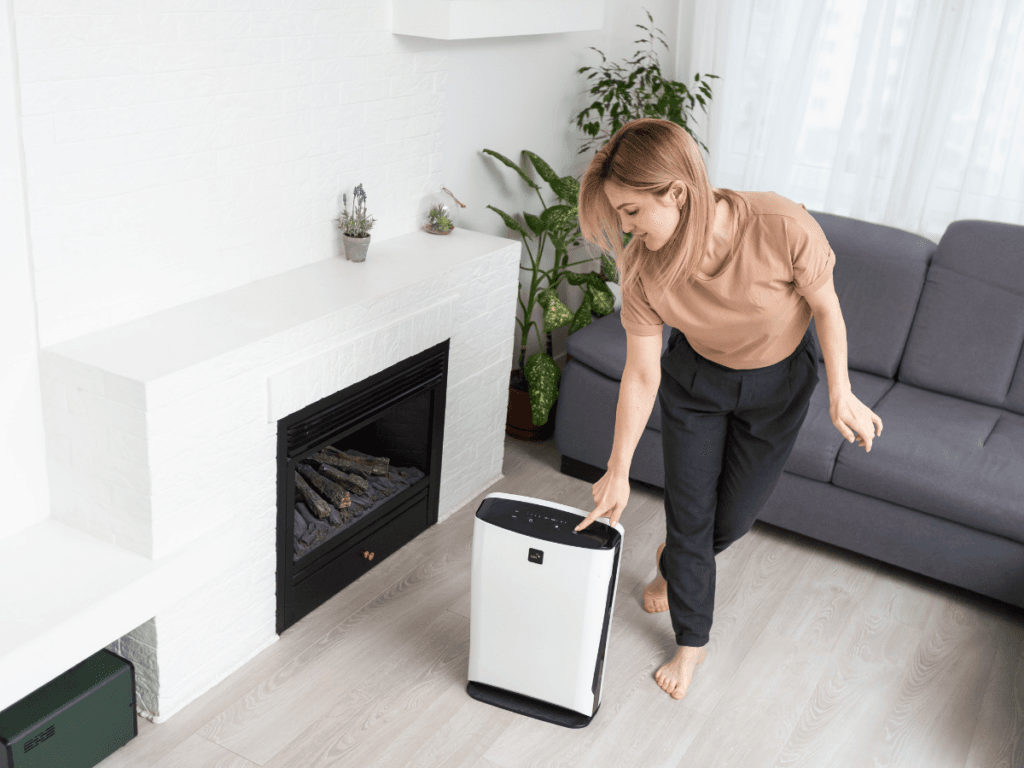
A whole-home dehumidifier can help keep indoor humidity more consistent, particularly during Georgia’s warm, humid months when an air conditioner may not always remove enough moisture on its own.
Effective moisture control, however, depends on more than running a dehumidifier. The best results come from managing humidity, addressing water intrusion, maintaining HVAC airflow, and reducing moisture at its source.
For most homes, indoor relative humidity between about 30% and 50% is a useful target. Rather than relying on how the air feels, homeowners can use a hygrometer or the humidity reading from a compatible control to track conditions throughout the day.
Set Humidity Based on Actual Indoor Conditions
A whole-home dehumidifier uses a humidistat or similar control to respond when indoor humidity rises above the selected setting. Once conditions improve, the system cycles off rather than removing moisture continuously.
That automatic operation can provide more consistent control than reacting to individual humid rooms with portable units. Still, the selected setting may require adjustment based on the season and how the house responds.
Watch for practical warning signs as well as the humidity reading. Condensation on windows or cool surfaces, persistent dampness, musty odors, and rooms that feel clammy can indicate that moisture remains too high.
The goal is balanced humidity, not exceptionally dry air. Removing more moisture than necessary can reduce comfort without providing a meaningful advantage.
Control Moisture at the Source
Mechanical dehumidification works best when obvious moisture sources are addressed at the same time.
Bathroom exhaust fans should vent humid shower air outdoors. Kitchen ventilation can help manage moisture produced while cooking. Clothes dryers should also be properly vented, and plumbing, roof, foundation, or drainage leaks should be repaired rather than left for the dehumidifier to compensate for.
Basements and crawl spaces deserve particular attention because moisture entering these areas can influence conditions elsewhere in the house.
A whole-home dehumidifier can manage moisture suspended in the air. It cannot repair a water leak, dry a chronically wet foundation, or correct poor exterior drainage.
Keep Airflow and HVAC Equipment Maintained
Humidity control depends partly on moving air effectively through the home.
Dirty filters, blocked returns, clogged condensate drains, dirty coils, and other HVAC problems can interfere with normal airflow and moisture removal. Routine system inspections are therefore part of a broader humidity-control strategy, especially before periods of heavy cooling demand.
Regular HVAC maintenance can help identify drainage, airflow, and equipment problems that might otherwise contribute to indoor moisture issues.
The dehumidifier itself also needs maintenance. Requirements vary by manufacturer and model, but homeowners should expect periodic filter inspection or replacement, condensate drain checks, and general equipment inspection.
Following the manufacturer’s maintenance schedule is more reliable than assuming the unit can operate indefinitely without attention.
Use Filtration for Particles, Not Moisture Removal
Air filtration and dehumidification perform different jobs. A filter captures airborne particles as air passes through the HVAC system. A dehumidifier removes water vapor. Improving one does not replace the other.
Filters may capture some airborne mold spores, dust, pollen, and other particles, but they cannot correct the damp conditions that allow mold to grow. Selecting a more restrictive filter without considering HVAC compatibility can also reduce airflow.
The appropriate HVAC air filter and MERV rating should balance particle capture with the airflow requirements of the specific system.
Understand What UV Lights Can and Cannot Do
UV-C equipment installed in an HVAC system may be used to limit microbial growth on surfaces that receive sufficient ultraviolet exposure, such as certain areas around an evaporator coil.
It is not a substitute for humidity control. A UV light does not remove water vapor, repair leaks, dry damp building materials, or eliminate every mold spore moving through a home. If excessive moisture continues, the conditions that allow mold growth remain.
That distinction matters when combining indoor air quality technologies. Dehumidification manages moisture, filtration captures particles, and appropriately installed UV equipment may address microbial growth in specific HVAC locations. These systems can complement one another, but they solve different problems.
Moisture Control Is the First Defense Against Mold Growth
Mold requires moisture, which makes controlling damp conditions one of the most important preventive measures.
If visible mold appears, simply lowering the humidity is not enough. The moisture source still needs to be found and corrected, and contaminated materials may require appropriate cleaning, removal, or professional assessment depending on the extent of the problem.
Homeowners should pay attention to:
- Recurring condensation
- Persistent musty odors
- Damp walls, ceilings, or flooring
- Water around HVAC equipment or condensate lines
- Leaks around plumbing, roofing, windows, or foundations
- Humidity that remains elevated despite dehumidifier operation
If humidity stays high while a whole-home dehumidifier runs frequently, the problem may involve equipment sizing, airflow, control settings, duct configuration, drainage, excessive outdoor-air infiltration, or an unresolved source of moisture.
Think of Humidity Control as a Whole-House Strategy
A whole-home dehumidifier can play a central role in keeping moisture under control, but it works best as part of a larger system.
Good moisture management combines measured humidity control with ventilation, leak prevention, effective drainage, appropriate filtration, HVAC maintenance, and prompt attention to damp materials.
That approach is more useful than relying on a single indoor air quality product. The objective is not simply to make the house feel less humid. It is to prevent excess moisture from becoming a recurring problem in the first place.
What Are the Benefits of a Whole-Home Dehumidifier?
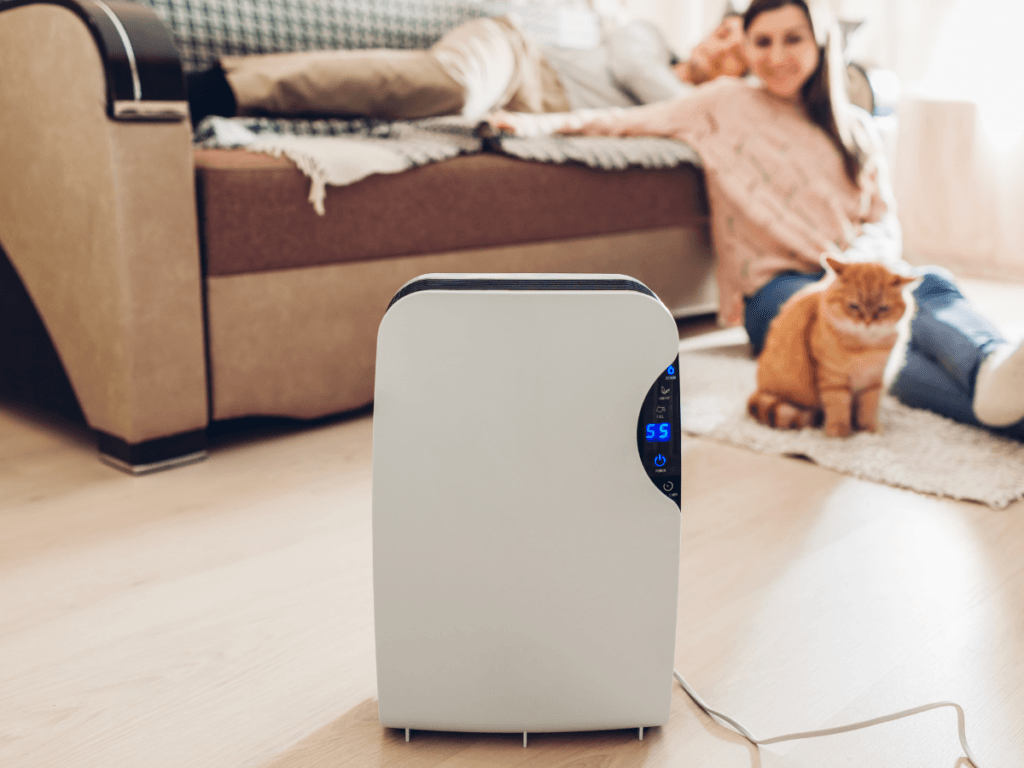
A whole-home dehumidifier helps manage excess moisture throughout the house rather than treating a single room at a time. That can be especially useful in humid climates, where indoor moisture may remain elevated even while the air conditioner is keeping the temperature comfortable.
The biggest advantages are not limited to making the air feel less sticky. Better humidity control can improve comfort, reduce condensation, make conditions less favorable for mold and dust mites, and help protect moisture-sensitive materials inside the home.
Indoor Air Can Feel More Comfortable at the Same Temperature
Humidity changes how warm a room feels because high moisture levels make it harder for perspiration to evaporate from the skin.
As a result, a house can reach the thermostat setting and still feel muggy or uncomfortable. Removing excess moisture can make the same indoor temperature feel more pleasant without necessarily requiring the thermostat to be lowered further.
This is particularly valuable during Georgia summers, when cooling and humidity control often need to work together. Modern HVAC systems can remove some moisture while cooling, but their ability to do so depends on proper sizing, runtime, airflow, and operating conditions.
A whole-home dehumidifier provides dedicated moisture removal when the cooling system alone is not maintaining comfortable humidity levels.
Lower Humidity Can Make the Home Less Favorable for Mold
Mold needs moisture to grow. Keeping indoor humidity under control can therefore reduce one of the conditions that supports mold development.
Dehumidification is most useful as a preventive measure. It can help limit condensation on cool surfaces and reduce persistent dampness, but it cannot solve every mold problem.
A roof leak, plumbing leak, wet crawl space, foundation seepage, or other direct source of water still needs to be repaired. Existing mold may also require appropriate cleaning or remediation rather than humidity control alone.
The benefit of a whole-home dehumidifier is that it helps manage moisture continuously once those underlying problems have been addressed.
Balanced Humidity Can Help Limit Dust Mite Conditions
Excess humidity can also create more favorable conditions for dust mites.
Reducing indoor moisture may help make the environment less supportive of them, which can be one part of a broader allergen-control strategy. Dehumidification itself, however, does not filter allergens, pollen, pet dander, or other particles from the air.
Those contaminants require filtration or other appropriate air-quality measures. This distinction is important because humidity control and air cleaning are complementary rather than interchangeable.
Homes dealing with several indoor air concerns may benefit from combining moisture management with HVAC strategies for reducing allergens instead of expecting one device to address every issue.
Moisture Control Can Help Protect Building Materials and Furnishings
Persistent indoor humidity affects more than comfort.
Wood flooring, trim, cabinetry, furniture, paper products, and other moisture-sensitive materials can absorb and release water as humidity changes. Extended exposure to damp conditions may contribute to swelling, warping, odors, staining, or deterioration depending on the material and severity of the moisture problem.
Condensation can create another concern. When humid air reaches a sufficiently cool surface, water can collect on windows, pipes, ductwork, or other materials.
A whole-home dehumidifier can reduce the amount of water vapor available for that condensation, though insulation problems, air leakage, or excessively cold surfaces may still need to be addressed separately.
Dehumidification Can Complement Air Conditioning
An air conditioner and a dehumidifier perform related but different jobs.
The primary purpose of the AC system is temperature control. Moisture removal happens as warm indoor air passes across the cold evaporator coil, but the amount removed depends partly on how long the system runs.
During mild but humid weather, the home may reach its temperature setting before the air conditioner has operated long enough to remove as much moisture as desired. Short cycling from an oversized system can create a similar problem.
Dedicated dehumidification allows moisture control to continue even when there is little demand for additional cooling. That can help create steadier comfort instead of forcing homeowners to lower the thermostat simply because the house feels humid.
Better Humidity Control May Support More Efficient Comfort
A whole-home dehumidifier should not be presented as an automatic way to lower utility bills. It uses electricity, and actual energy use depends on the equipment, controls, home, and HVAC system. The potential advantage is more precise comfort management.
When excess humidity is making a house feel warmer than it is, homeowners may respond by lowering the thermostat. Controlling moisture directly can reduce that temptation and allow temperature and humidity to be managed as separate comfort factors.
Other energy-efficient HVAC improvements may also influence how effectively a home maintains comfortable temperature and humidity levels.
Whole-Home Control Is More Consistent Than Room-by-Room Dehumidification
Portable dehumidifiers can be useful for a basement, bedroom, or another isolated problem area, but they only treat the air that reaches that particular unit. They also require individual drainage arrangements and maintenance.
A whole-home dehumidifier is designed to manage moisture across a larger portion of the house through an integrated or dedicated air-distribution system.
That makes it particularly useful when high humidity is not confined to one room. The real benefit is consistency. Rather than waiting until individual spaces feel damp and reacting with separate appliances, the system monitors humidity and operates automatically when moisture rises above the selected level.
For homes that experience widespread or recurring humidity problems, that ability to manage moisture independently of temperature can make indoor conditions more comfortable and predictable throughout the year.
What Should Professional Whole-Home Dehumidifier Installation Include?
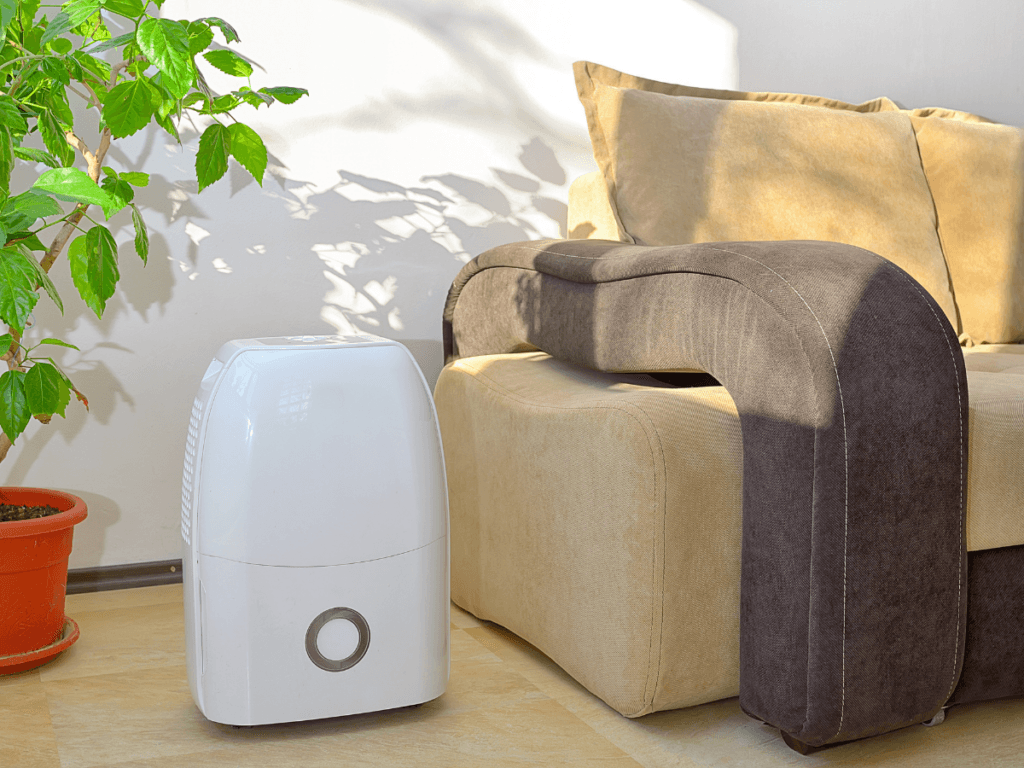
Professional installation of a whole-home dehumidifier should do more than get the equipment running.
The installer needs to confirm that the unit is appropriate for the home, integrates correctly with the HVAC system, removes condensate safely, responds to humidity controls, and delivers the expected airflow once everything is operating together.
For homeowners, this makes the installation appointment an important quality-control step. A properly commissioned system should leave little uncertainty about how the equipment works, how it will be maintained, or what indoor humidity conditions to expect.
Verify the Equipment Matches the Home and HVAC System
Before installation begins, the technician should confirm that the selected dehumidifier is appropriate for the home’s moisture-control needs and compatible with the existing HVAC equipment.
That review may include available installation space, duct layout, airflow requirements, electrical needs, drainage options, and the manufacturer’s installation specifications.
Compatibility matters because a whole-home dehumidifier becomes part of a larger comfort system. Adding equipment without accounting for airflow or existing HVAC performance can create problems that were not present before.
If the house already has weak airflow, unusual cycling, or inconsistent temperatures, those conditions should be identified rather than automatically attributed to humidity.
Follow the Manufacturer’s Ducting and Airflow Requirements
Whole-home dehumidifiers can use different duct configurations depending on the model and HVAC layout. Some operate with dedicated return and supply ducts, while others integrate more directly with existing ductwork. The correct arrangement is equipment-specific.
During professional installation, connections should be positioned and sized according to the manufacturer’s requirements, sealed to limit air leakage, and checked for unwanted restrictions. The goal is to move enough air through the dehumidifier without compromising the performance of the heating and cooling system.
This is also why simply finding an open section of ductwork is not an adequate installation strategy.
Confirm Condensate Can Drain Reliably
Every whole-home dehumidifier produces condensate as moisture is removed from the air.
Before the installation is considered complete, the technician should verify that the drain is properly configured and that water flows to the intended location without leaking or backing up. Where gravity drainage is not possible, the installation may require a condensate pump.
This should be tested with the system operating, not assumed from the way the drain looks.
Drain problems can eventually lead to water around HVAC equipment or nearby building materials, defeating the purpose of installing equipment to control excess moisture.
Coordinate the Dehumidifier With HVAC Controls
Control setup determines when the dehumidifier operates and, depending on the system design, how it interacts with the HVAC blower or other equipment.
The technician should verify the humidity sensor or humidistat reading and configure the controls according to the manufacturer’s instructions. If the dehumidifier communicates with a thermostat or integrated HVAC control, those functions should also be tested.
An important part of commissioning is confirming that the equipment starts when humidity rises above the selected setting and shuts down appropriately once conditions change.
The objective is automatic moisture control, not continuous operation.
Commission the System Under Operating Conditions
A professional installation should finish with functional testing. Rather than checking only whether the dehumidifier powers on, commissioning should evaluate the system as a whole.
That can include confirming airflow, examining duct connections, checking drainage, verifying control response, and listening for unusual operating noise.
Existing HVAC performance should also remain stable after the equipment is added. Regular HVAC system inspections and tune-ups can later help identify airflow, control, filter, and condensate issues that could affect how the dehumidifier and central HVAC equipment operate together.
Know What to Expect Before the Technician Leaves
Homeowners should receive enough information to operate and maintain the equipment confidently.
A useful handoff should cover:
- The recommended humidity setting or starting range
- How to read and adjust the humidity control
- Where the dehumidifier filter is located
- How often the filter should be checked
- Where condensate drains
- What normal operation sounds like
- Which indicators or alerts require attention
- What maintenance the manufacturer requires
- Which warranty documents should be retained
It is also helpful to know that indoor humidity may not change instantly. The system needs time to remove moisture from the air, and moisture stored in furnishings and building materials can also influence indoor conditions.
Monitor Performance After Installation
Commissioning does not end with the first successful operating cycle. Homeowners should watch humidity readings and indoor comfort during the days that follow, particularly when outdoor conditions are humid.
A whole-home dehumidifier that runs constantly without reaching its target, rarely operates despite persistent dampness, leaks water, or noticeably disrupts HVAC airflow may need further evaluation.
Those symptoms do not automatically mean the equipment itself is defective. Control settings, sizing, airflow, duct configuration, drainage, or an unresolved moisture source could be responsible.
Professional installation is valuable because it addresses the whole system rather than treating the dehumidifier as a stand-alone appliance.
Careful integration, commissioning, and homeowner orientation help ensure the equipment can provide reliable humidity control without creating new airflow, drainage, or operational problems elsewhere in the home.
How Do You Choose an Energy-Efficient Whole-Home Dehumidifier?
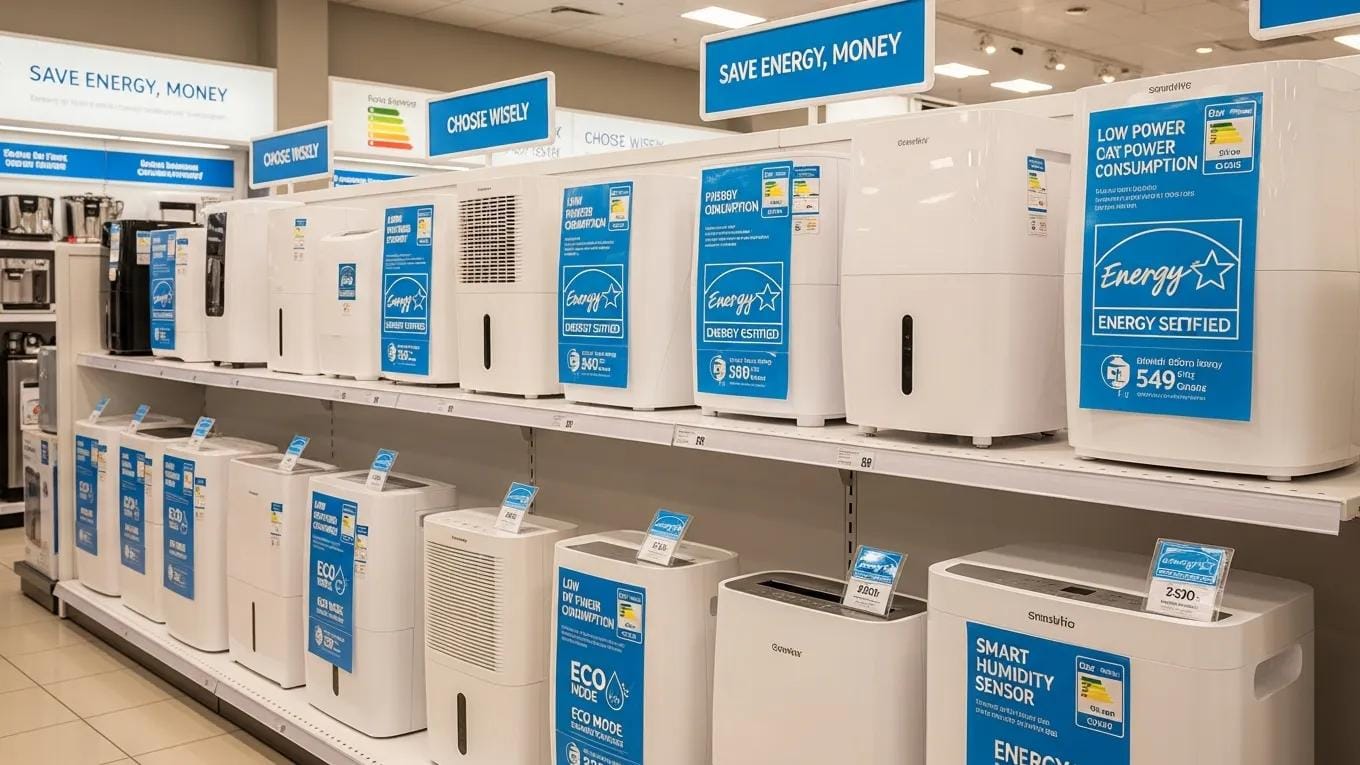
Energy efficiency matters when choosing a whole-home dehumidifier because moisture control can require extended operation during humid weather.
The most efficient option, however, is not simply the model with the lowest advertised energy use. Capacity, efficiency ratings, controls, installation design, and the building’s actual moisture load all influence operating cost.
Residential and commercial properties also have different requirements. A system suitable for a house should not be assumed to provide adequate humidity control for an office, retail space, warehouse, or other commercial building.
Compare Efficiency and Moisture Removal Together
For residential equipment, ENERGY STAR certification can provide a useful starting point when comparing qualifying dehumidifiers. Efficiency is generally evaluated in relation to how much moisture the equipment removes for the electricity it consumes.
That distinction matters. A unit that draws less power but cannot adequately control the home’s moisture load is not necessarily the more efficient choice in practice.
When comparing models, consider:
- Moisture-removal capacity
- Rated energy efficiency
- ENERGY STAR certification, when applicable
- Recommended operating conditions
- Airflow requirements
- Control options
- Drainage requirements
- Filter and maintenance needs
Homeowners should compare equipment within the capacity range appropriate for their property rather than selecting the smallest available system simply to reduce electricity consumption.
Correct Sizing Matters for Energy Performance
A whole-home dehumidifier needs enough capacity to manage the moisture entering and being generated inside the house.
Square footage provides useful context, but it is not the only sizing factor. Climate, air leakage, ventilation, occupancy, crawl spaces or basements, building construction, and existing HVAC performance can all affect the moisture load.
A system that cannot keep up may operate for long periods without reaching the desired humidity setting. Choosing a much larger unit without considering the application is not automatically more efficient either.
The better approach is to match capacity to actual conditions and then compare the efficiency of appropriately sized options.
Controls Can Reduce Unnecessary Runtime
Useful controls allow the equipment to respond to humidity rather than running continuously.
A humidistat or compatible HVAC control can activate the dehumidifier when indoor relative humidity rises above its set point and stop operation once conditions improve. Some systems may also support monitoring, scheduling, or integration with other HVAC controls.
Advanced features are valuable when they improve control, but they should not overshadow basic performance. Reliable humidity sensing, appropriate capacity, and correct installation are more important than adding connectivity features that have little effect on moisture removal.
Consider Total Operating Cost, Not Just Purchase Price
The least expensive dehumidifier at installation may not be the least expensive equipment to own. Purchase price should be considered alongside expected electricity consumption, filter costs, maintenance requirements, warranty coverage, and anticipated service life.
The same principle applies to other HVAC efficiency decisions: equipment ratings provide useful comparison points, but actual performance also depends on how the system is selected, installed, controlled, and maintained.
It is also worth being cautious about promises of guaranteed utility savings. Adding a whole-home dehumidifier introduces another electrical load.
In some homes, improved humidity control may allow occupants to remain comfortable without setting the air conditioner as low, but the actual effect on energy bills varies. The primary reason to install dehumidification should be a genuine need for better moisture control.
Residential and Commercial Dehumidification Solve Different Problems
Commercial dehumidification should not be treated as a larger version of a residential installation.
Homes typically have relatively predictable occupancy and comfort requirements. Commercial buildings can have substantial variations in size, occupancy, ventilation, outdoor-air intake, operating schedules, internal heat and moisture generation, and process requirements.
For example, an office and a warehouse of similar square footage may have very different humidity-control needs.
| Factor | Residential Application | Commercial Application |
|---|---|---|
| Primary goal | Household comfort and moisture control | Comfort, building needs, operations, or process requirements |
| Sizing | Based on home moisture load and conditions | Based on building-specific loads and usage |
| HVAC integration | Usually relatively straightforward | May involve larger or more complex air systems |
| Controls | Humidistat or compatible HVAC controls | May involve building automation or more advanced controls |
| Operating schedule | Driven largely by household conditions | May vary with occupancy and business hours |
| Equipment capacity | Residential-scale | Potentially much larger or staged |
Commercial Systems Require Building-Specific Design
Ventilation is particularly important in commercial applications. Bringing outdoor air into a building can introduce a significant amount of moisture during humid weather, so dehumidification requirements may need to account for both indoor sources and ventilation loads.
Commercial projects can also involve different electrical requirements, drainage arrangements, duct systems, controls, codes, and commissioning procedures. A building may need dedicated dehumidification, HVAC-integrated equipment, or a different humidity-control strategy entirely.
For properties evaluating broader commercial HVAC installation, humidity control should therefore be considered as part of the building’s overall mechanical design rather than selected as a stand-alone appliance.
Efficiency Starts With Choosing the Right System
An efficient whole-home dehumidifier is one that removes the required moisture without unnecessary energy use while maintaining the intended indoor humidity level.
Efficiency ratings help narrow the choices, but they cannot determine the best system on their own. Capacity, moisture load, controls, HVAC compatibility, installation quality, and maintenance all affect real-world performance.
For commercial properties, those same principles apply on a larger and often more complex scale. Matching the equipment and control strategy to the building is ultimately more important than choosing a dehumidifier based on a single efficiency specification.
How Do You Maintain and Troubleshoot a Whole-Home Dehumidifier?
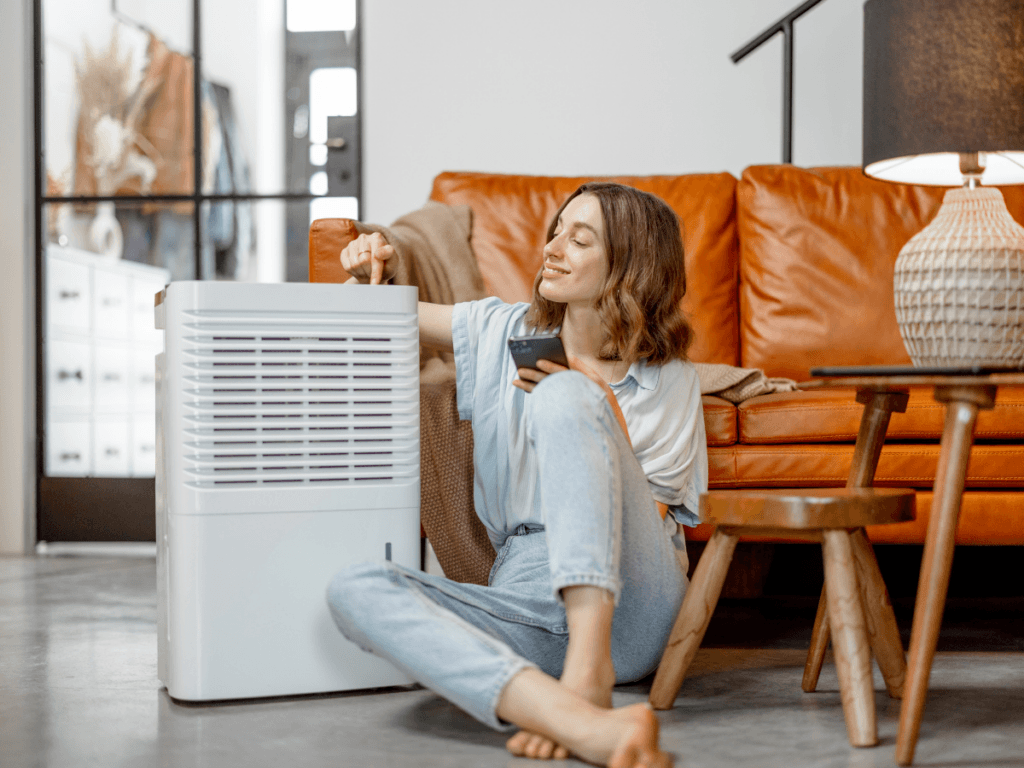
A whole-home dehumidifier needs routine attention to keep removing moisture effectively. Most homeowner maintenance is straightforward, but the exact schedule depends on the manufacturer, model, operating conditions, and how heavily the system runs.
Rather than relying on a universal annual service interval, follow the maintenance schedule provided with the equipment and watch for changes in performance.
A system that suddenly runs longer, produces unusual noises, leaks water, or struggles to reach the humidity setting may need attention even if its next scheduled service is months away.
Check and Replace the Dehumidifier Filter
The filter protects internal components from dust and debris while allowing adequate airflow through the unit. As it becomes dirty, airflow can decrease and the dehumidifier may have to operate longer to remove the same amount of moisture.
How often the filter needs cleaning or replacement varies considerably. Homes with pets, renovation dust, heavy equipment use, or other airborne particles may require more frequent attention.
Use the filter type and replacement interval specified by the manufacturer rather than substituting a more restrictive filter without confirming compatibility.
Keep the Condensate Drain Clear
A whole-home dehumidifier continuously removes water from the air, so reliable drainage is essential.
Periodically check the area around the unit and accessible drain components for:
- Standing or dripping water
- Algae or debris around the drain
- Kinked or disconnected tubing
- A condensate pump that is not operating
- Water stains near the equipment
A restricted drain can cause condensate to back up instead of leaving the system normally. Depending on the equipment, this may trigger a safety switch, cause the unit to stop operating, or create a leak.
Water around HVAC equipment should not be ignored. Leaks and excess moisture around an HVAC system can have several causes, so persistent drainage problems deserve proper diagnosis rather than repeated cleanup.
Inspect Accessible Airflow Paths
Dehumidification depends on moving enough air across the equipment.
Make sure accessible grilles and duct openings associated with the system are not obstructed by stored items, furniture, dust buildup, or other restrictions. If the whole-home dehumidifier is connected to the central HVAC system, problems elsewhere in the airflow path can also affect performance.
A sudden change in airflow is different from routine filter maintenance. If airflow remains weak after the appropriate filters have been checked, the cause may lie deeper in the ductwork, blower operation, or equipment installation.
Watch the Humidity Reading, Not Just the Runtime
Long operating cycles are not automatically evidence of a malfunction. During very humid weather or after indoor moisture has risen substantially, the dehumidifier may need to run for an extended period.
The more useful question is whether humidity is actually decreasing.
If the system operates frequently but indoor relative humidity remains well above the selected setting, possible causes include a dirty filter, restricted airflow, control or sensor problems, excessive moisture entering the house, insufficient equipment capacity, or a mechanical fault.
Before assuming the dehumidifier has failed, confirm that doors and windows are not being left open and that there is no active plumbing, roof, crawl space, or foundation moisture problem.
Know Which Symptoms Point to a Specific Problem
Some operating symptoms provide useful clues, although they do not replace professional diagnosis.
| Symptom | Possible Causes |
|---|---|
| Humidity remains high | Restricted airflow, incorrect control setting, excessive moisture load, sensor problem, equipment fault |
| Unit does not start | Control setting, power problem, safety switch, electrical or internal component issue |
| Water around equipment | Blocked drain, loose drain connection, condensate pump problem |
| Unit runs unusually long | High moisture load, dirty filter, airflow restriction, sizing or mechanical problem |
| New rattling or vibration | Loose panel, mounting issue, fan or internal component problem |
| Musty odor persists | Ongoing moisture source, contaminated materials, drainage or HVAC moisture issue |
Avoid repeatedly resetting controls or changing humidity settings to compensate for a problem that continues to return.
Leave Internal Repairs to a Qualified Technician
Homeowners can usually handle filter changes, visual inspections, basic control checks, and keeping accessible areas around the equipment clear.
Opening electrical compartments, repairing internal refrigeration components, diagnosing motors or sensors, modifying ductwork, and disassembling internal parts require appropriate training and tools.
Coil cleaning may also require professional service depending on the unit’s design and accessibility. Using harsh cleaners or attempting to reach inaccessible components can damage the coil or surrounding equipment.
Maintenance Should Follow the Equipment, Not a Fixed Calendar
There is no single service schedule that applies to every whole-home dehumidifier.
Manufacturer instructions should determine filter intervals, cleaning requirements, approved maintenance procedures, and any periodic professional service. Conditions inside the home can shorten those intervals, particularly when the equipment operates heavily for much of the year.
It is useful to keep a simple record of filter changes, maintenance visits, humidity readings, and repairs. Changes become easier to spot when there is a normal performance pattern for comparison.
A whole-home dehumidifier that is properly maintained should respond predictably to changing humidity conditions. Rising humidity, persistent drainage problems, unusual sounds, or noticeably different runtime are more useful warning signs than waiting for the equipment to stop working completely.
Conclusion
Excess indoor humidity can make a home feel uncomfortable while also creating conditions that encourage mold growth, musty odors, and moisture-related damage.
A whole-home dehumidifier provides more consistent moisture control than portable units by working with your HVAC system to manage humidity throughout the house.
Proper sizing and professional installation are essential for achieving efficient performance and maintaining healthier indoor conditions. For whole-home dehumidifier installation and professional HVAC solutions, choose Ace Tech Heating & Cooling.
If you’re ready to improve humidity control and protect your home from excess moisture, call (404) 369-9100 to speak with the team at Ace Tech Heating & Cooling or fill out the site form to get your free quote today.