Your HVAC system can only do so much if your home is constantly losing heated or cooled air. Gaps in insulation allow outdoor temperatures to affect indoor comfort, forcing your heating and cooling equipment to work harder, use more energy, and wear out faster.
Improving insulation is one of the most effective ways to boost HVAC performance year-round.
Home insulation HVAC performance strategies focus on keeping conditioned air where it belongs. Proper attic, wall, and crawl space insulation, combined with air sealing, helps maintain consistent indoor temperatures while reducing unnecessary strain on your system.
The result is greater comfort, improved energy efficiency, and lower utility costs. With the right insulation strategy, you can create a more comfortable home in every season while helping your HVAC system perform at its best for years to come.
Home Insulation HVAC Solutions for a More Comfortable Home
What Are the Main Types of Home Insulation That Affect HVAC Efficiency?
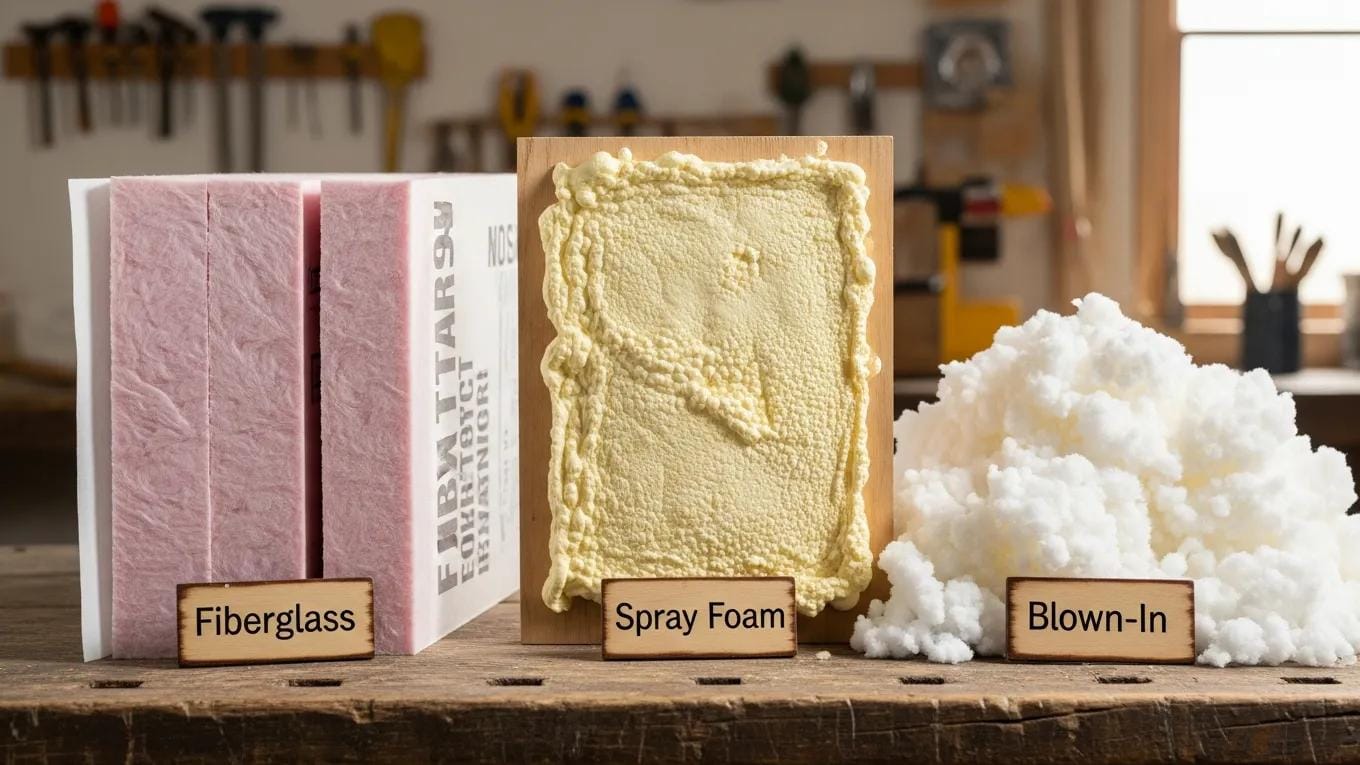
The type of insulation in your home plays a major role in how efficiently your heating and cooling system operates. Even the most advanced HVAC equipment has to work harder if conditioned air escapes or outdoor temperatures easily penetrate the building envelope.
Understanding the relationship between home insulation HVAC performance can help homeowners make informed decisions that improve comfort while lowering energy costs.
Several insulation materials are commonly used in residential construction, each offering different advantages depending on the home’s age, design, and energy goals. Choosing the right option often depends on where the insulation will be installed and how well it addresses air leakage and heat transfer.
How Do Different Insulation Materials Improve HVAC System Performance?
Every insulation material helps slow heat transfer, but they do so in different ways. The right choice can reduce the workload on your HVAC system, helping it maintain a consistent indoor temperature throughout the year.
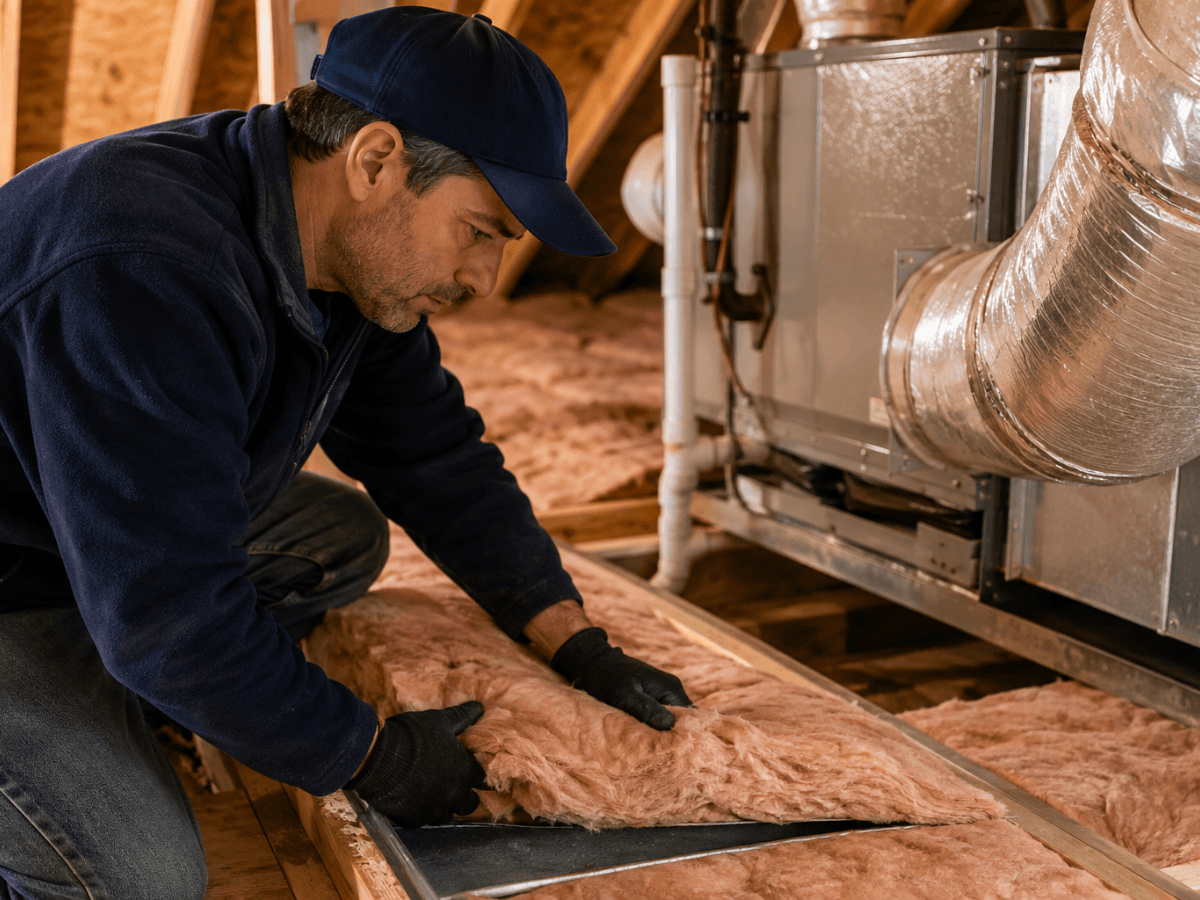
Fiberglass insulation remains one of the most widely used options because it is affordable, effective, and relatively easy to install. It performs well in attics, walls, and crawl spaces, making it a practical solution for many homes.
When installed correctly, fiberglass helps reduce heat loss in winter and heat gain during summer, allowing HVAC systems to operate more efficiently.
Spray foam insulation offers a different advantage. In addition to providing excellent thermal resistance, it expands to seal small gaps and cracks where air commonly escapes.
This air-sealing capability can significantly improve home insulation HVAC performance by reducing drafts and preventing conditioned air from leaking outdoors.
Blown-in insulation is often recommended for older homes or retrofit projects. Because it fills irregular spaces and hard-to-reach cavities, it can improve insulation coverage without requiring major renovations.
This makes it an effective option for increasing energy efficiency in existing homes where insulation may have settled or deteriorated over time.
What Is The Role Of R-Value In Insulation For HVAC Efficiency?
When comparing insulation products, one of the most important measurements to understand is the R-value. This rating indicates how well an insulation material resists heat flow. In general, the higher the R-value, the better the material insulates against temperature changes.
However, selecting the highest R-value available is not always necessary. The ideal level depends on your climate, the part of the home being insulated, and local building recommendations.
For example, attics typically require higher R-values than interior walls because they are exposed to greater temperature extremes.
Improving R-value where insulation is lacking allows the HVAC system to maintain indoor comfort with less effort. As conditioned air stays inside longer, heating and cooling equipment cycles less frequently, reducing energy consumption and extending the lifespan of the system.
Choosing The Right Insulation For Long-Term Efficiency
The best insulation strategy often combines the right material with proper installation. Even high-performance insulation can fall short if gaps, compression, or poor workmanship allow air to bypass the insulated areas.
For homeowners looking to improve home insulation HVAC efficiency, it’s worth evaluating the entire building envelope rather than focusing on one area alone. Attics, exterior walls, crawl spaces, and rim joists all contribute to overall energy performance.
Addressing insulation deficiencies alongside air sealing can provide greater improvements than upgrading HVAC equipment alone.
By selecting insulation materials that match your home’s needs and ensuring they are installed correctly, you can create a more comfortable indoor environment, reduce monthly utility costs, and help your HVAC system operate more efficiently throughout every season.
How Does Proper Home Insulation Reduce HVAC Energy Consumption?
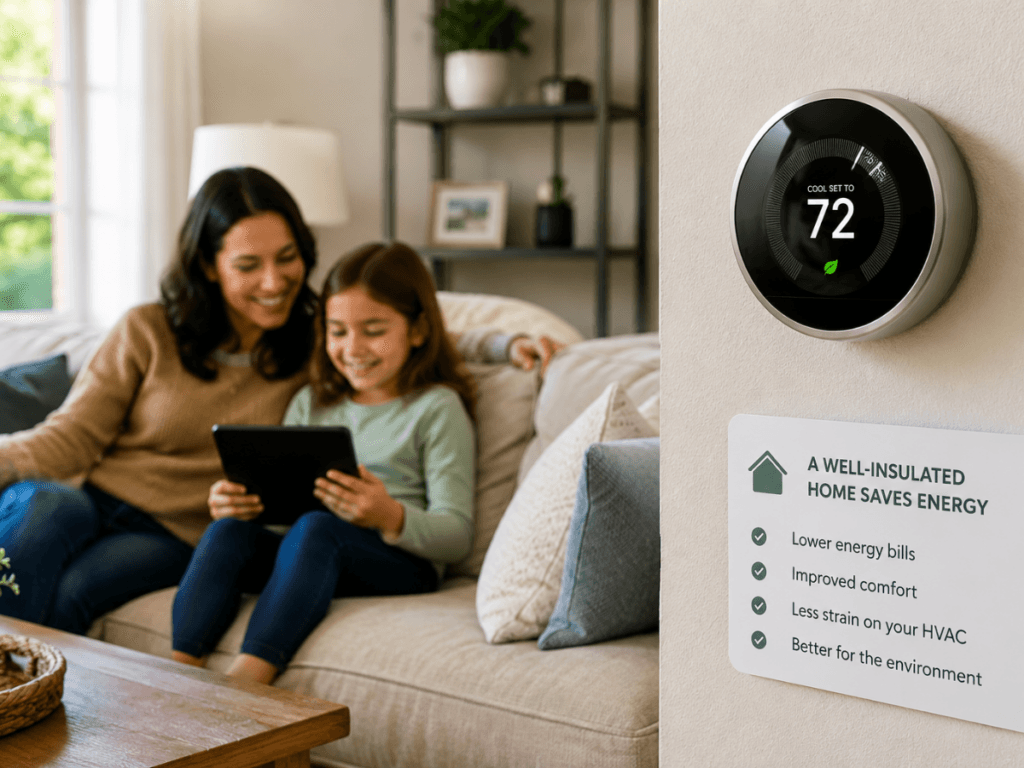
A well-insulated home creates a protective barrier that slows the movement of heat between the inside and outside of your house. During the winter, it helps keep warm air from escaping, while in the summer, it limits the amount of heat entering your living space.
Because indoor temperatures remain more stable, your heating and cooling system does not have to cycle on as often or run for extended periods.
This is one of the biggest reasons why home insulation HVAC performance is so closely connected. When insulation is doing its job, your HVAC system can maintain a comfortable temperature with less effort, reducing unnecessary energy use throughout the year.
The result is a home that feels more consistently comfortable without constantly adjusting the thermostat.
Proper insulation also helps eliminate common problem areas, such as hot upstairs rooms, chilly drafts near windows, or uneven temperatures between different parts of the house. While insulation cannot solve every comfort issue on its own, it creates the conditions your HVAC system needs to operate more efficiently.
What Are the Energy Savings Associated with Effective Insulation?
Improving your home’s insulation can have a noticeable impact on monthly energy expenses. Since heating and cooling account for a large share of household energy use, reducing the amount of conditioned air that escapes can significantly lower utility costs.
In many homes, effective insulation can reduce heating and cooling energy consumption by as much as 20%, depending on the home’s condition and the quality of the insulation.
The financial benefits often extend beyond lower monthly bills. When an HVAC system does not have to work as hard every day, it experiences less strain on important components such as the compressor, blower motor, and heat exchanger.
Over time, this reduced workload can help minimize wear and may contribute to a longer equipment lifespan. Another advantage is greater year-round comfort. Well-insulated homes are less affected by sudden outdoor temperature changes, making it easier to maintain steady indoor conditions.
This improved efficiency and comfort make upgrading insulation one of the most practical ways to improve home insulation HVAC performance while also lowering long-term operating expenses.
How Can Insulation Lower HVAC Operating Costs?
Lower HVAC operating costs come from reducing the amount of work your heating and cooling system must perform each day.
Even a high-efficiency HVAC unit will consume more energy if conditioned air continually escapes through poorly insulated walls, ceilings, or attic spaces.
Strengthening your home’s insulation helps keep that energy where it belongs. Insulation also helps prevent moisture-related problems that can increase maintenance costs.
Properly insulated areas are less likely to experience condensation caused by large temperature differences, reducing the risk of mold growth, water damage, and other issues that may affect both the home’s structure and HVAC performance.
If your home is older or you have noticed rising energy bills without a clear explanation, it may be worthwhile to have your insulation evaluated.
Adding insulation to an under-insulated attic, sealing gaps around penetrations, or replacing deteriorated materials can improve efficiency without requiring a complete HVAC replacement.
When insulation and your heating and cooling system work together, they create a more energy-efficient home that costs less to operate. Investing in insulation improvements not only helps reduce monthly utility bills but also supports more reliable HVAC performance, increased indoor comfort, and long-term savings.
How Can IT Solutions Enhance HVAC Performance Monitoring Related to Insulation?
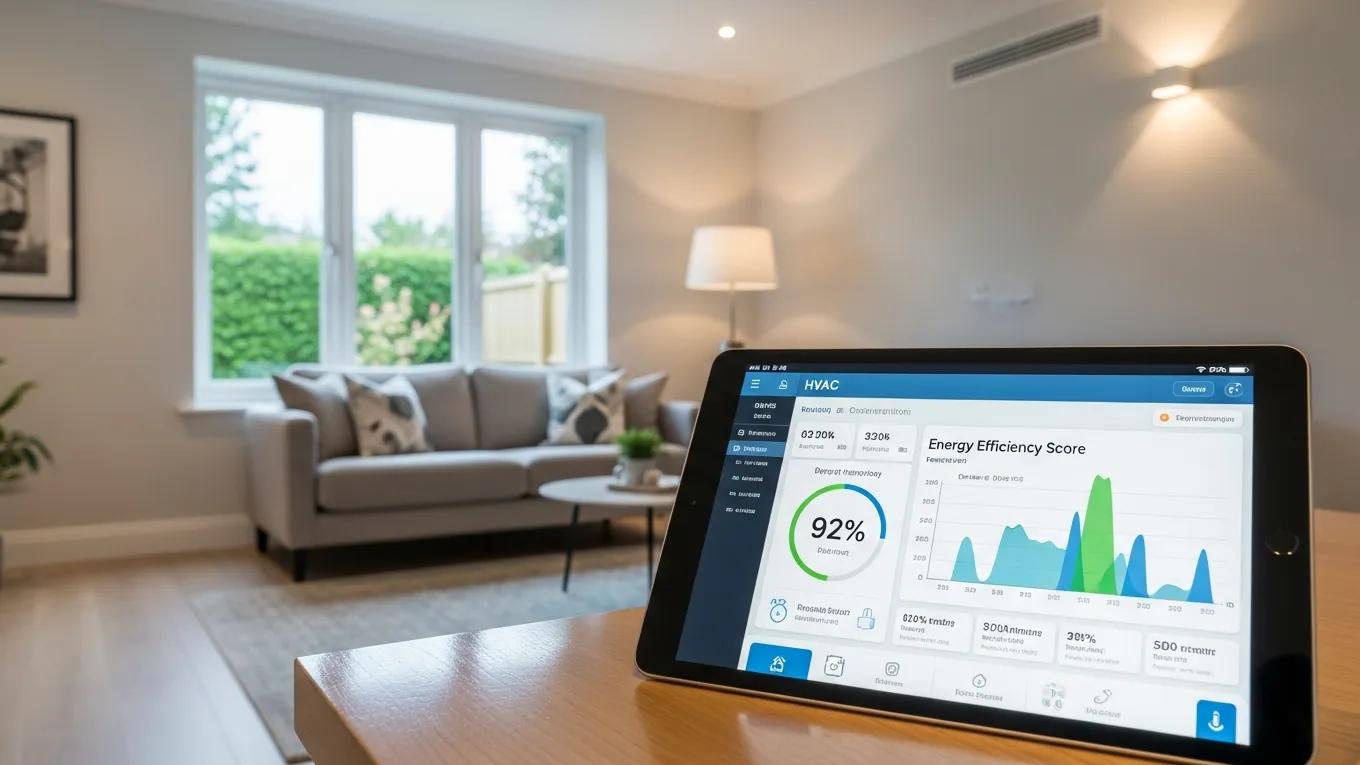
Modern HVAC systems do much more than heat and cool a home. With the help of connected technology, they can track energy use, indoor temperatures, humidity levels, and system performance in real time.
When paired with information about a home’s insulation, these smart monitoring tools provide a clearer picture of how efficiently the entire home is operating.
The relationship between home insulation HVAC performance becomes easier to understand when data is available. For example, if a system runs longer than expected on mild days, the issue may not be the equipment itself.
Instead, the monitoring system may reveal excessive heat loss through the attic, walls, or other poorly insulated areas. Rather than immediately replacing HVAC equipment, homeowners can identify whether improving insulation would deliver better results.
This data-driven approach helps eliminate guesswork. Instead of relying on assumptions, homeowners and HVAC professionals can make decisions based on measurable performance trends, leading to more effective energy-saving improvements.
What Are Smart HVAC Systems and Their Benefits for Energy Efficiency?
Smart HVAC systems use sensors, automation, and internet-connected controls to make heating and cooling more responsive to a home’s changing conditions.
Unlike traditional systems that simply operate until a thermostat reaches the desired temperature, smart systems continuously adjust performance based on occupancy, outdoor weather, humidity, and indoor comfort levels.
Many homeowners begin with a programmable or smart thermostat, but today’s technology goes much further. Zoned climate control, remote system management, maintenance alerts, and energy reports all help improve efficiency without requiring constant manual adjustments.
These features become even more effective when the home has adequate insulation. A well-insulated home retains conditioned air longer, allowing smart HVAC systems to maintain comfort with shorter run times and fewer heating or cooling cycles.
In other words, smart technology can optimize performance, but insulation creates the stable indoor environment that allows those optimizations to have the greatest impact.
For homeowners looking to improve home insulation HVAC efficiency, combining quality insulation with smart controls often delivers better long-term results than relying on either upgrade alone.
How Does HVAC Monitoring Integrate With Home Insulation Data?
One of the greatest advantages of connected HVAC technology is its ability to reveal patterns that might otherwise go unnoticed. By comparing indoor temperatures, equipment runtime, humidity levels, and seasonal energy use, monitoring systems can highlight areas where insulation may be underperforming.
For instance, if one room consistently requires additional heating or cooling despite the HVAC system operating normally, the issue may point to insufficient insulation or hidden air leaks rather than faulty equipment.
Similarly, unusually long system cycles during moderate weather can indicate that conditioned air is escaping faster than expected.
Some advanced home energy management platforms combine HVAC performance data with information from energy audits or thermal imaging inspections.
This broader view allows homeowners to prioritize upgrades based on where the greatest energy losses are occurring instead of making improvements through trial and error.
Over time, these insights also make preventive maintenance more effective. As insulation improvements are completed, homeowners can compare new energy reports with previous performance to measure the results.
This ongoing feedback helps ensure that both the insulation and HVAC system continue working together efficiently.
Ultimately, technology provides valuable information, but its greatest benefit comes from helping homeowners make smarter decisions.
When monitoring tools are paired with strong insulation, the result is improved comfort, lower energy consumption, and better overall home insulation HVAC performance throughout every season.
What Are the Best Practices for Improving HVAC Performance Through Insulation?
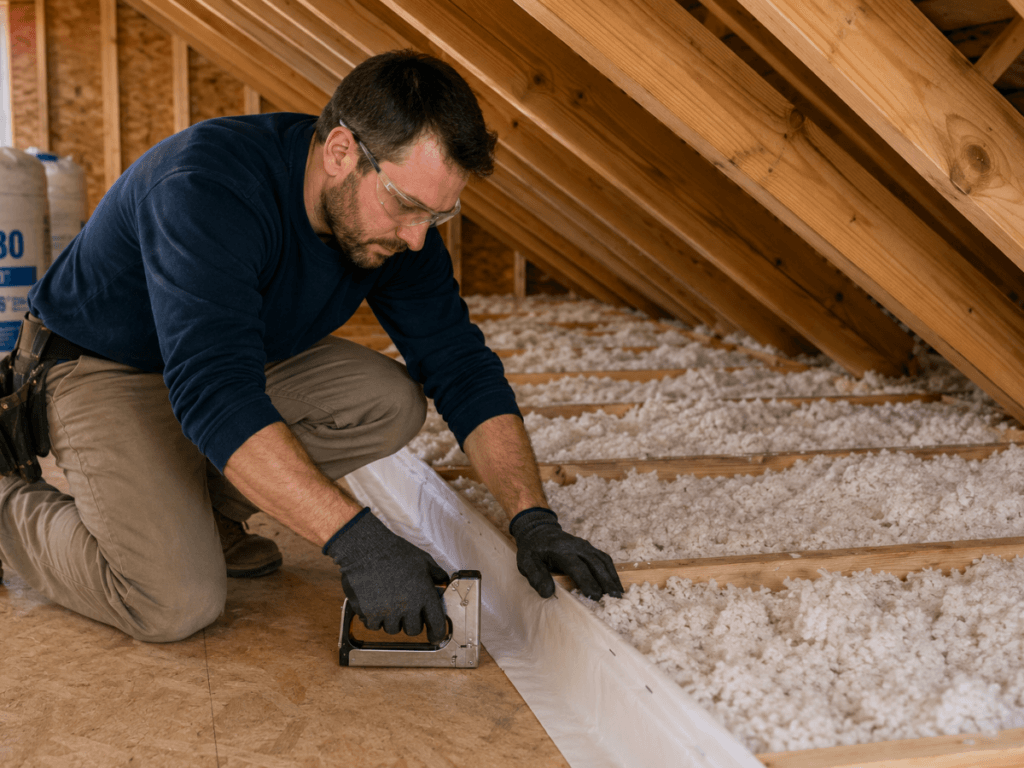
Improving insulation is one of the most effective ways to help an HVAC system operate efficiently, but the best results come from taking a thoughtful approach rather than simply adding more insulation.
Every home has unique needs based on its age, design, climate, and existing building materials, so choosing the right improvements is just as important as making them.
For homeowners looking to improve home insulation HVAC performance, a few proven practices can make a meaningful difference:
- Choose insulation that matches your home’s needs. Different areas of the home may require different insulation materials and R-values depending on local climate conditions and the location being insulated.
- Prioritize proper installation. Even high-quality insulation can lose effectiveness if it leaves gaps, compresses over time, or is installed incorrectly. Professional installation helps ensure the insulation performs as intended.
- Inspect insulation periodically. Insulation is not a one-time project that should be forgotten. Moisture damage, settling, pest activity, and aging materials can all reduce its effectiveness over time.
Rather than treating insulation as an isolated upgrade, homeowners should view it as part of the home’s overall energy strategy. When insulation, air sealing, and HVAC equipment work together, the system can maintain comfort with less effort throughout the year.
How Should Homeowners Choose Insulation Types for Optimal HVAC Efficiency?
Selecting the right insulation starts with understanding where energy is being lost. While many homeowners immediately think of the attic, walls, crawl spaces, basements, and rim joists can also contribute to significant heat transfer if they are poorly insulated.
Climate is another important factor. Homes in colder regions typically benefit from higher R-values to reduce heat loss during winter, while homes in warmer climates focus on limiting heat gain during the summer.
Local building codes often provide minimum insulation recommendations, but homeowners may choose higher-performance options when seeking greater energy efficiency.
The insulation material itself also matters. Fiberglass batts, blown-in cellulose, spray foam, and rigid foam boards each offer different advantages depending on the application. Some products are ideal for open attic spaces, while others are better suited for sealing hard-to-reach areas or reducing air leakage.
A professional home energy assessment can help identify which improvements will have the greatest impact. Instead of replacing insulation throughout the entire home, homeowners may discover that upgrading one or two key areas provides the most noticeable improvement in home insulation HVAC efficiency.
Why Ongoing Maintenance Matters After Insulation Upgrades
Installing new insulation is an important first step, but maintaining its performance is equally valuable over the long term. Even well-installed insulation can become less effective if it is exposed to moisture, compressed by storage items, or disturbed during future home renovations.
Periodic inspections allow homeowners to identify small issues before they become larger problems. Water stains, pest damage, or areas where insulation has shifted can all reduce thermal performance and increase the workload placed on the HVAC system.
Addressing these issues early helps preserve both comfort and energy efficiency. It is also worth monitoring how the home feels after insulation improvements are completed.
More consistent indoor temperatures, shorter HVAC run times, and lower utility bills are all positive signs that the upgrades are working as intended. If uneven temperatures or high energy costs continue, additional air sealing or HVAC maintenance may be needed.
By viewing insulation as an ongoing investment rather than a one-time project, homeowners can continue improving comfort, lowering operating costs, and supporting reliable home insulation HVAC performance for years to come.
What Maintenance Tips Support HVAC and Insulation Synergy?
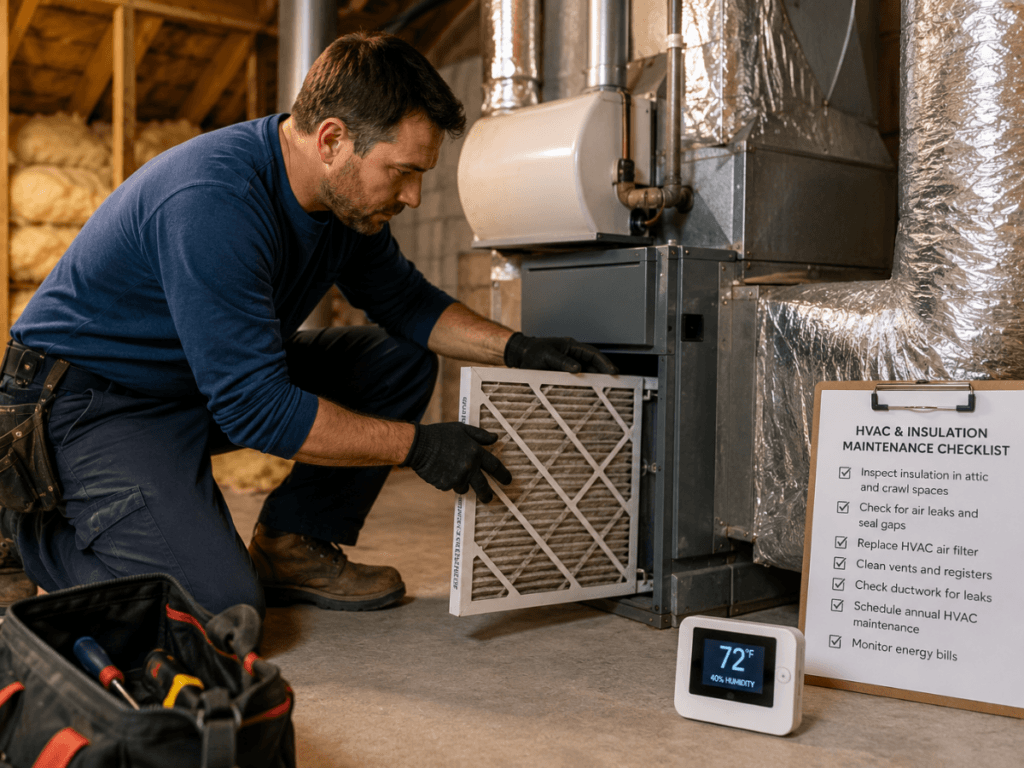
Keeping your HVAC system and insulation in good condition is an ongoing process rather than a one-time improvement.
Even high-quality insulation and an efficient heating and cooling system can lose effectiveness if they are not maintained over time. Regular upkeep helps both systems work together, improving comfort while keeping energy costs under control.
One of the most important habits is performing routine visual inspections. Homeowners should periodically check accessible areas such as the attic, basement, or crawl space for signs of moisture, compressed insulation, pest damage, or areas where insulation has shifted.
Catching these problems early helps preserve the insulating barrier that reduces the workload on the HVAC system. Air leaks deserve equal attention.
Small gaps around windows, doors, plumbing penetrations, electrical outlets, and ductwork can allow conditioned air to escape, forcing the HVAC system to run longer than necessary.
Sealing these leaks complements insulation by creating a tighter building envelope, improving overall home insulation HVAC performance.
Monitoring monthly energy bills is another practical way to identify developing issues. If energy use suddenly increases without a significant change in weather or household habits, it could indicate deteriorating insulation, hidden air leaks, or an HVAC system that requires maintenance.
Addressing these concerns early often prevents larger repairs and helps maintain consistent indoor comfort.
How Do Different Insulation Types Compare?
Not every insulation material performs the same way, and choosing the right option depends on your home’s construction, climate, and renovation goals.
While R-value is an important measure of thermal resistance, installation quality and the intended application are equally important when evaluating long-term performance.
| Insulation Type | Typical R-Value Range | Primary Benefits |
|---|---|---|
| Fiberglass Insulation | 2.9 to 4.3 per inch | Affordable, widely available, and suitable for many walls and attics |
| Spray Foam Insulation | 3.6 to 6.5 per inch | Excellent air sealing with higher insulating performance |
| Blown-In Insulation | 3.1 to 4.2 per inch | Fills irregular spaces and works well for retrofitting existing homes |
Rather than focusing only on the highest R-value, homeowners should consider where the insulation will be installed and whether air sealing is also needed. A balanced approach often provides better long-term results than simply choosing the material with the highest insulation rating.
Bringing Insulation and HVAC Together for Long-Term Efficiency
A comfortable and energy-efficient home depends on more than an efficient furnace or air conditioner. The building envelope, including insulation and air sealing, plays an equally important role in determining how hard the HVAC system must work throughout the year.
When homeowners invest in quality insulation, maintain it regularly, and address air leaks as they appear, they create an environment where heating and cooling equipment can operate at peak efficiency.
Pairing these improvements with routine HVAC maintenance and modern monitoring technology further strengthens overall system performance.
Understanding the connection between home insulation HVAC performance allows homeowners to make smarter decisions about energy efficiency.
Whether upgrading insulation, sealing leaks, or simply keeping both systems well-maintained, these improvements work together to lower operating costs, increase indoor comfort, and support the long-term reliability of the home’s heating and cooling system.
Conclusion
Improving your home’s insulation is one of the most effective ways to support HVAC performance and maintain year-round comfort. Proper insulation helps reduce energy loss, keeps indoor temperatures more consistent, and allows your heating and cooling system to operate more efficiently throughout every season.
Combined with regular HVAC maintenance, these strategies can lower energy costs while extending the life of your equipment. For trusted heating and cooling services and expert HVAC solutions, choose Ace Tech Heating & Cooling.
If you’re ready to improve your home’s comfort and energy efficiency, call (404) 369-9100 to speak with the team at Ace Tech Heating & Cooling or fill out the site form to get your free quote today.